
Cats

September 28, 2015

The Big Stink

Tags: ,

Seepage. That’s a word to alert you that this post is not for refined sensibilities. I have been told by people (who don’t know me all that well) that I have refined sensibilities. I used to; over the years I have put aside so much for my cats.

Anyway, ten days ago, early in the morning a long-haired ginger cat appeared outside the sunroom door. I was reading and Winston was curled up on my feet when Artemis went rigid. How her rigidity alerted Winston who was snoring, I don’t understand but the next thing I knew, Winston had leaped off the couch and muscled Artemis aside.

Artemis is a quiet cat who seldom makes a sound. Her meow is a “freep” rarely heard. She has a secret weapon, though: she’s a screamer and it’s all the more effective because she’s usually so self-contained. When Winston interrupted her vigilance over the ginger cat, Artemis screeched like someone was pulling her legs off. Then I nearly leapt off the couch.

When I got myself untangled from the blankets, tea cup, and book, Winston and the ginger cat were face to face like a pitcher and a referee about to altercate. When I tried to distract them, the ginger cat ran but Winston overtook him. A whirling ball of cat bounced across the yard with fur flying in all directions.

The belligerence lasted only about 30 seconds. The whirling fur was stopped by the fence. I shook the hose that was lying in the garden bed, giving Ginger a chance to escape over the wall. Winston huffed and snorted and did a few circles in the grass.

His tail was almost as big as his body, and that is saying a great deal. He’s a big-boned tomcat with a broad face and thick neck. His belly looks as though he had swallowed a basketball. When he walks he slowly dribbles the ball from side to side. His ponderous thud is usually preceded by a highly irritating whine that I have written about before. My neighbor Bill calls him the Dreadnought.

When he calmed down and stopped emitting his fighting odor, I combed over Winston’s head to see what the damage had been. I located a lot of puncture wounds, which I cleaned and left to the air. I visited the wounds every day until they scabbed over. All standard procedure.

I was congratulating myself on being such a capable nurse when a putrid stench became part of the medical follow-ups. I combed all over Winston trying to figure out where the odor was originating. I knew it was an abscess: you never forget that odor. It took nearly two days for me to see that red and brown goo was hanging out of his left ear. To call it goo doesn’t do it justice. It was like a fungus the size of cotton balls. I cleared out the worst of it and washed the area with saline.

Ginger had hooked him in several places in the swirls of his auricle. There was a cut mark, a puncture wound and what looked like an area dotted with shrapnel. I waited for the salt water to do its magic. In a few hours the seepage began: loathesome, yellow gunk oozing out of the cut and coming out of the shrapnel points as though through a sieve, reeking enough to nauseate. It was like one of those horror movies from the 1950s: “It Slimed Out of the Ear.”

Winston’s last great puncture wound had healed quickly as soon as Artemis got involved. She couldn’t get to it fast enough to lick it away as it oozed. But this abscess appeared to be more than she was up for. Either that or she wasn’t into ears. She has her sensibilities, too. She avoided him for a few days. Winston was Philoctetes, the Greek wounded on his way to Troy whose wound stank so badly, they left him on an island. They came back for him, though, because they needed him in the end. Artemis finally curled up to sleep with Winston.

Twice a day I treated the wounds with the saline. Every few hours I went in with a kleenex, cotton ball, gauze, or Q-tip and soaked up whatever the wound had heaved up. The morning was the worst because the abscess drained through the night, and then hardened in the various little curls of the ear.

Winston was oblivious to anything out of the ordinary going on in his body. He demanded his meals on schedule, and whined relentlessly when I forgot his arthritis meds, which he counts as a treat. He still wanted to have his cigarette on the front porch at 9:15 PM. He still scratched incessantly at my bed to go outside at four in the morning.

One morning we had a little repeat of the Ginger cat appearance except that it was a raccoon. It was 6:00 AM and still dark outside. I was in the sun-room, swathed in blankets, reading. Artemis was poised at the sliding door, which was cracked open six inches. I got up to see what the attraction was and there was a raccoon. It retreated when it saw me. From behind the raccoon I heard Winston hiss.

“Ah geez,” I thought. “This cat thinks he’s Steve McQueen.”

Winston shot by the startled raccoon and came toward me. I stepped out, snatched him inside and closed the door. The raccoon ambled around outside the door, inspecting the stacked wood and sniffing at the stump that serves as a booster for the cats to get through the cat flap into the sunroom—that is when the flap is open, which it hasn’t been for years, since the last gift of a giant rat got thumped into the house by, you guessed it, the Dreadnought.

The irony is that Winston is a big baby. He’s a scaredy-cat. He’s actually a bully not over-endowed with brains, which is why he blusters and fights other cats and hisses at raccoons. That a woman of my refined sensibilities ended up with bully for a cat is a source of everlasting shame to me.

Ah, HumanityCurmudgeonFriends

September 22, 2015

Too Old for This Shit

Tags: , , , , , , , ,

“Bite of Broadview” signs are popping up in my neighborhood. They sadden me partly because this particular event used to be called “Christ the King Harvest Festival” and the whole “Bite of” thing is so played and partly because I won’t be going. As I gotten older I’ve contracted a condition called Tofts. It flares up with certain predictable triggers: in crowds, around noise, near parades, trying to find a place to park and at the movies when people talk to each other as though they are sitting in front of their television. TOFTS. It stands for Too Old for This Shit. Its only treatment is to immediately leave the trigger source.

I have looked forward to the “Christ the King Harvest Festival” every year for 25 years. It’s always the third weekend in September. Christ the King is a big Catholic church in Broadview, just north of my Crown Hill neighborhood. I was raised in minimalist (ok, constipated) Protestant churches so it always amazes me what a big-ass affair a wealthy Catholic church can put on. Christ the King Harvest Festival had the usual booths of crafters (one of them dedicated to arty rosaries), and food tents, outdoor barbeque, bake sales, and in later years, a coffee bar.

What set it apart from anything the Protestants ever did –besides rosaries–were the rides. They actually brought in a carousel, Ferris wheel, roller coaster, bumper cars, a crazy house, swings and mild rides for little children. Once you reached the carnival area, there was carnival food: elephant ears, cotton candy and popcorn. I always walked around and marveled at the rides. They were clearly from a different era, old and worn and funky. It wouldn’t surprise me to learn I rode one of these exact rides in the 1960s in Olympia or in the 1950s when there were rides across the street from Bellevue Square.

It was a sensory experience, the Harvest Festival: the smell of popcorn and coffee, the screams coming from the roller coaster, the sight of nuns in habits amongst the grilled corn and face painting. I loved it until two years ago when they brought in a stage, a band and Amplified Sound. It was no longer a sensory experience. It became a Single Sense Experience that was overwhelming even with ear plugs in my ears. I lasted all of a minute and a half before I left. TOFTS.

The Foss Home does an annual farmers’ market at the end of the summer so it’s actually a harvest festival, too. At my first visit several years ago I won a beautiful hand-blown glass vase with my guess that it held 750 Starbursts. 750 Starbursts were the last thing I needed in my house but I was thrilled to have won the beautiful vase. I managed to hold onto the candies until Halloween when I dumped them on my students and the Trick or Treaters.750 Starbursts

My friend Kay and I go every year to the Foss Home Farmer’s Market. We buy fruits and vegetables. We take one (at least) of everything that’s free whether we want it or not. Kay chats with vendors. I enter every contest for anything except tickets to sports events. It’s small and fun. But last year there was a stage and a band and someone saying “Testing” into a microphone with an amplification which could be heard in the next county. I couldn’t believe it. The Foss Home is a residential facility for the elderly: is this what they wanted? Why weren’t they too old for this shit? I was out of there before the band got to their first bridge.

My friend Nancy and I visited Seattle Tilth’s Harvest Festival. I parked in front of Nancy’s house and we made the short walk to the Good Shepherd Center, Tilth’s home. Two blocks away I wanted to turn around and go back. I could already hear the band.

“I know you don’t know this but it’s Nirvana,” Nancy said to me.

I know very little but I think she meant that the unholy outpouring from behind all the amps and speakers was a cover of a Nirvana song.

“It’s not Nirvana,” I said. “It’s hell.”

I left Nancy to walk to the far edges of the festival. It was 87 degrees and the sun was in my face. In the surreal atmosphere the vendors seemed like pimps in the Tenderloin, attempting to entice me to their booths as I searched for shade and quiet. After twenty minutes I found Nancy.

“I want to go home.”

“OK,” she said.

Nancy really is a lovely person. She has a husband who responds exactly as I do to noise and to crowds who seem to be making a frenetic attempt to convince themselves they are having fun. She also knows me quite well so my request was no surprise.

Most of my friends would not have been surprised. They often end a description of an event they particularly enjoyed by saying, “You would have hated it.”

My friends are similarly unfazed by my restaurant behavior: Before we’re even seated, I ask for the music to be turned down. After once such request, the waitperson looked at me uncomprehendingly.

“Is it too loud?” she asked.

“Can’t you tell?”

“Oh, I don’t know. I just tune it out.”

I entered Bartell Drugs one Sunday morning, after a lovely quiet walk, to be met with a blast of whiny sounds coming through some lousy amplification system. The clerk on duty claimed to not know how to turn down the “music.”

“We can’t adjust it from here,” she said.

“You’re kidding,” I said. “How do you concentrate?”

“Oh, I just tune it out.”

This begs the question: if it must be tuned out, why is it on at all?

My worst experience along these lines (not counting the Neighbors From Hell who I sold my house to get away from) involved 1) the invasion of my own home and 2) the element of surprise. I was reading under the lilacs on the afternoon of the summer solstice three years ago when my ears were assaulted by a whiny distorted sound that crescendoed, and then receded over and over. The whiny sound was followed by other timbres, other rhythms, similarly distorted. I got up to investigate.

I followed thumps and blares to a house two and a half blocks away where to my dismay I learned that a “music festival” was going on until ten o’clock that night. The current performers were students and amateurs but the professionals, which I took to mean the Greatest Decibels, were coming on at 7:00. I asked the impresario why he hadn’t let anyone know about his Amplified Sound Fest.

“I told everyone in the block,” he said.

“When it’s this loud, you need to let people within a four block radius know,” I said.

“You aren’t into music?” he asked.

I looked at him. I looked at the ground. I looked at him and took a deep breath.

“Yeah, that’s it,” I said. “I’m not into music.”

I sighed, took my TOFTS, and went home to close the windows.


the vase

Ah, HumanityFriends

September 12, 2015

Farewell My Yard Sale

Tags: , , , , , ,

I started writing this post at 10:00 last Sunday morning while sitting in my sun room surrounded by the junk of six households. It was day three of what I was calling my Farewell Yard Sale. It was the last sale I expect to do even though my mean friend (Tim) smirked when I said it to him. The sheer magnitude of stuff mounting up over the past year has been oppressive. And it didn’t help that I was geared up to have all that stuff gone by early June and then it was too hot all summer long to have a sale. Every time I went in my cabin out back to get a chair or folding table, I had to wade through piles and boxes of human detritus.

It’s my own fault, really. First of all there’s my stuff. Then there’s the stuff from my parents’ house that is still here after five years. It’s my (mis)fortune to have the storage space. My neighbor Gwen gives me all kinds of stuff. It’s all high quality because Gwen knows no other—and she knows something about just about everything. Then there’s my neighbor Bill. I’ve been trying for years to interest him into doing a sale with me but he dreads all the work of sorting and deciding. He managed to get together 5 or 6 boxes to unload onto my sale.

My friend Kay went on a serious house clean last year and took a layer off her 40 plus years’ accumulation. For months I got periodic phone calls that began with “Can you use. . .?” followed by a carload of stuff delivered by her partner Jerry who always had a patient if sardonic look on his face. He says he gets nervous when Kay and I get together.

And finally there’s my friend Nancy who has really classy stuff and I actually asked her to treat me like the Goodwill. It wasn’t much farther to come to my house and there was no wait to unload.

It seemed like a good idea at the time but it got a little out of hand. When it came time to set up the sale, I felt overwhelmed. My friend Sue came over at 7 AM on Thursday and did a bunch of heavy lifting. She moved all my plants out of the sun room and set up tables. She put the saw horses and a sheet of plywood outside. Then she piled all the boxes of junk in the middle of the sun room so I could start unpacking and setting up. Bill brought over another set of saw horses and plywood. Thirteen tables full of stuff. Full. The plywood was bowing in the middle.

It’s now been a week since the sawhorses went up. I have taken two carloads of stuff to Value Village. The last of the sale is sitting outside my house with a free sign on it. My sun room is looking spacious and empty and ready to fill up with my watercolor class, which starts next week. My back hurts. These are signs that this probably is my last sale.

I used to do a spook house every year in the cabin. A few moms of my students helped black it out and arrange some scary tableaux. It got quite complicated as the years went on. We had a fog machine and a full size coffin that Gwen volunteered to lie in and raise up from. It got to be so much work that often it was still up in April. Eventually I had to go back there, fight through all the fake cobwebs, and dismantle it. Finally it was enough and I sold the coffin.

I’ve been doing some species of yard sale every year since the late 80s.  My Farewell Sale ran for four days, Friday through Monday of Labor Day weekend. I had nice little pile of cash at the end, half of which was made by noon on the first day. But the money is only part of the appeal. There’s the Playing Store aspect. I get a huge kick out of that. Then there’s the fact that people actually pay money to take large, hideous, and awkward items off my property. And there’s the entertaining parade of humanity that troops in and out.

My friends dropped by with coffee in the morning (Nancy) and soup in the afternoon (Nina). Gwen popped over before I had time to hide the things she has given me that weren’t necessarily meant for the sale. Bill was in and out a few times. My nice friend (Tim) came to say hi and collect all the apples that had fallen off the tree. He makes the most succulent apple butter imaginable. He helped me collect my cardboard street signs at the end of the second day because it was expected to rain that night.

The first shoppers to arrive are always the retired men and women looking for gold and silver jewelry. They know each other from yard and estate sales all over the area. I myself have a fair number of Regulars, people that come every year to see the garden and to see if I am selling something they can’t do without.

“I don’t see anything I can’t do without,” they say.

“You’re missing the whole point,” I say.

Book dealers and book lovers spend a lot of time in the book room and often come out and ask for a box. Besides walls of mystery, fiction, history and humor, I have complete sets of the World Book Encyclopedia, the colorful Golden Book Encyclopedia, and a partial set of Funk and Wagnalls’ Encyclopedia. It’s partial because I started using its pages to light my wood stove when I stopped taking the New York Times. Yes, that’s right: I burn books.

The Book Room

The Book Room

I love the middle aged women who slowly collect an enormous pile, commenting all the while on what lovely things I have. The retired men looking for tools usually leave disappointed although thanks to Bill there were a few Guy Things this time around. Young couples come in trying to appear above it all and sometimes they succeed.

There is another kind of couple that shows up. The most polite way to describe them is Retro. On Sunday one such couple appeared to have wandered in from the set of Perry Mason.

“Oh Albie, buy these for me. I have to have them. They’re only $8!” She picked up one of five differently fashioned and colored aperitif glasses blooming on a tray.

Albie who was ready reeking of whiskey at 11:00 in the morning growled, “They aren’t worth $8,” earning him my undying disgust.

“Then buy me this. I want this.” She pounced on something else but I was keeping an eye on my aperitif glasses so I don’t know what it was.

“We’re supposed to be on a budget and now you’re wanting all this stuff,” Albie grunted.

“Oh have we started the budget?”

Nancy had come with coffee and was wandering around the sun room when a young man came through the door. He was black and spoke with an accent. I asked where he was from.

“Viet Nam,” he told me.

I was thrown into white, middle-class confusion. He was black. He couldn’t be from Viet Nam.

“You must know a lot of languages,” I said.

“Yeah, two.”

“Oh, English and. . ?”wild irish rose wine

“Yeah, Vietnamese.”

Out of the corner of my eye I saw Nancy trying not to laugh at me.

The young man was full of energy. He bought the bottle of Richard’s Wild Irish Rose wine that I had been trying to get rid of for years. I had attached a little disclaimer to say that the label was vintage but I could not vouch for the liquid inside. I couldn’t vouch for anything about it except that my mother had hidden it in her closet while it was still two thirds full so no one would know her lips had touched liquor. That could have been any time since the 70s. Kay took a swig of it last year and hadn’t died from it.

The Black Vietnamese man bought a lot of dishes and plates. He bought five cups. He bought my bong that looked like Merlin, the extra filters and a pack of Zig-zag cigarette papers. He bought a suitcase that I would have paid him to take away since it was too big to be a carry-on and it would take all my yard sale earnings to check a bag that size these days. My new favorite customer said he goes back to Vietnam every year and likes to take gifts to everyone.

Nancy held it in admirably until he left, then she laughed that thank god I had finally calmed down about where the man was from. Nancy herself was born in Lebanon, lived in the UAE, and went to school in India and Pakistan. In addition she teaches at a community college. CC campuses are hot beds of multi-culturalism, trigger warnings and political correctness these days. She was very nice about explaining the obvious to me: the man’s father could have been an African American G-I. Nancy fields a dozen faux pas like mine every day before second period.

Clearly I don’t get out enough. I’ve been living in a world of Wild Irish Rose wine, Funk and Wagnalls Encyclopedia and the cast from Perry Mason. See you next year at my Second Annual Farewell Yard Sale.

BooksWorld War II

August 30, 2015

Christine and Francis Working Together

Tags: , , , , ,

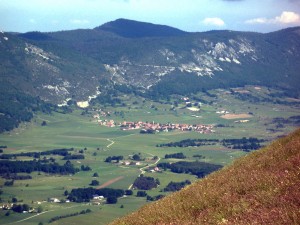
The Vercors Massif in southeast France rises half a mile high, creating a natural fortress, crisscrossed with forests, farmland, ravines, caves, and secret paths. There are eight gateway roads but only one that’s easily accessible. In 1942 the Vercors was a gathering place for the Maquis.

The Maquis was born when the Allies began their North African campaign, which prompted the Germans to broaden their occupation to all of France. When the Germans began conscripting young French men to work in factories in Germany, it caused an exodus of men to the hills and forests. The largest concentration of these guerilla fighters was in the Vercors Massif.

Someone had the heady idea of creating a free French republic on the Vercors right there in the middle of occupied France. They hoisted a French flag where it could be seen by and could irritate the German garrison in Grenoble.  Men—and women– had outlooks above all the approaches and could pick off the Germans if they tried to enter the plateau. The maquisards crept into towns in the area, stole equipment, firearms and vehicles and blew up train tracks and bridges, and then disappeared back onto the Vercors. For a while this worked beautifully but in the long run, this use of the Vercors as a permanent home for the Maquis was naïveté looking for a tragedy.

While this was the situation on the ground, back at HQ there was internecine fighting amongst the De Gaullists, S.O.E, and MI6. London had no control over the Maquis, many who were communists with their added agenda, but S.O.E. had to contend with everything: the out of touch bureaucracy in London, the testosterone of the very angry French, the Communists, and the American OSS, which wouldn’t play with either the Communists or De Gaulle. Subterranean politics over who would control France after the war was responsible for a lot of what we cynically refer to as “Casualties of War.”

In any case, in the run-up to D-Day, S.O.E. had the job of creating an illusion that there would be landings on both the north and south coasts of France simultaneously in order to keep part of the German army on alert in the south. Then when the landings began on the Normandy beaches, sabotage all over the country would prevent troops from moving north. All of this did happen to some extent. Eisenhower calculated that S.O.E. shaved six months off the length of the war by these methods.

The Vercors was part of this diversionary activity with devastating results. Close to D-Day, Maquis leaders on Vercors got an order from S.O.E. southern headquarters in Algiers to mobilize and start an uprising to divert German attention. All over the area men left their families and joined the Maquis for this final push. The Vercors was in Francis Cammaerts’ Jockey network and he was a regular visitor to the plateau. When he got wind of the situation, he pointed out that the Vercors didn’t take orders from Algiers, but from London. When the cock-up got straightened out, London naïvely ordered the men to go home where they would have all been rounded up by the Germans and shot.

Now the Free Republic was a prison of a ragtag bunch of men and boys with limited means of defending themselves and little training. Their only advantage was their knowledge of the terrain. Wire after wire went out requesting supplies and back-up and for the nearest airfield to be bombed because the Luftwaffe was massing there. On July 14, Bastille Day, there was finally a huge parachute drop of supplies onto the Vercors. Unfortunately it came in daylight, also visible to the Germans. As the French tried to collect the hundreds of canisters, the Germans launched their attack on the Vercors. Tanks roared up the passes and the Luftwaffe attacked by air. Towns were razed and people were killed with grotesque sadism.  A hospital that had moved from a town to a cave was massacred, patients and staff.

Christine Granville had been parachuted into this mess as Francis’ new courier. During the Bastille Day drop and subsequent German attack, she reportedly spent days searching out, unpacking and distributing every canister she could find. Danger really got her going.

Christine and Francis immediately took to one another. Both had initiative, energy and charm. When the Germans attacked the Vercors, initiative, energy and charm didn’t go very far. Christine and Francis were part of a small party that was able to escape.  Christine moved on to charm a group of Polish POWs near the Italian border who had been conned into working for Germany into changing sides again.  While she was at this task, Francis was captured with two of his men and jailed in the town of Digne.

Here is Christine at her most audacious: She marched into Gestapo headquarters in Digne, bluffed a man called Waem.  She told him she was  Field Marshall Montgomery’s niece and a British spy.  She wanted the three English prisoners released in exchange for safe passage for himself out of France.  By now the Americans had landed on the south coast and were heading inland so this was a shrewd inticement.

On the morning that Francis and his two companions were to be shot, they were marched out of their cell by Waem. But instead of turning them toward the soccer field that was used as a place of execution, he herded them into a car.  Past a patrol point and around a corner, there was Christine waiting by the side of the road.  She got into the car and they drove to safety.

Francis lived to be 90 years old.  He worked for Unesco, and created an international system for the exchange of schoolchildren in western Europe.  He was a professor of education at Nairobi University in Kenya, then head of Rolle College at Exeter.  He and his wife Nan retired to France where he lived among former members of his circuit until his death.

Christine did not do so well.  She belonged to the war, and to danger and adventure.  The British government dismissed her as “no longer needed” after the war.  This happened to many of the S.O.E. agents; maybe because so much has been written about her that it seems particularly malicious in her case.  She was not given military honors by the British although she was by the French and Polish.  Official intervention on her behalf could not get her British citizenship.  She ended up working as a stewardess on a cruise ship.

On one of her voyages, she became acquainted with an unstable young man–George Muldowney– who began to stalk her.  One night –the night before she was to leave England to meet with a former lover on the continent and with high hopes for the relationship, Muldowney stabbed her to death in the lobby of her hotel.  She was 44 years old.

Every bio of Francis and Christine and every overview of S.O.E. tells the Vercors Story and the audacious escape at Digne.  Xan Fielding, one of the two men captured with Francis, writes about their capture at Digne in Hide and Seek, a book he dedicated to Christine.

One book that is devoted entirely to the story of the Vercors is Tears of Glory by Michael Pearson.


Combe Laval Road

Combe Laval Road

cemetery at Vassieux

cemetery at Vassieux

map

One horrible WWII photo

One horrible WWII photo

Lassieux cave, which housed the hospital

Lassieux cave, which housed the hospital

Vassieux en Vercors

Vassieux en Vercors

BooksWorld War II

August 19, 2015

They spy: Christine Granville and Francis Cammaerts

Tags: , , , , , ,

The life expectancy of a WW II spy was not long, but Christine Granville flashed across the sky with particular brightness. Of the two books I read about her, The Spy Who Loved by Claire Mulley was by far the better written and researched. Published in 2012, the author had access to previously classified documents.  Claire Mulley explicates her book title: Christine loved life, men, adventure, independence and Poland.

Christine, by Madeleine Masson was scrubbed clean under orders from a group of friends and admirers that banded together to protect Christine’s reputation after her death in 1952 . Masson was herself an agent in France and she had, briefly, met Christine.

Christine was born Krystyna Skarbek in 1908 in Warsaw, the daughter of a Catholic count and a wealthy Jewish woman. She grew up riding, skiing, hiking and being bored and mischievous at school, if setting a priest’s robes on fire in order to make mass go faster could be called mischievous. Later in her life she was described as being “a loner and a law unto herself” (Vera Atkins) and as having “an almost pathological tendency to take risks” (Owen O’Malley.) Today she probably would have been medicated.

It was for Poland that she began her career as a spy, and entirely of her own initiative. In Hungary after Hitler invaded Poland, she made contact with the seminal Polish resistance, which was trying to get British propaganda into Poland. All borders were closely guarded except for where the Tatra Mountains separated the two countries. The mountains were so treacherous that it seemed a waste of resources to patrol them. Jan Marusarz, a pre-war Olympic skiing star was doing courier work across the Tatras when Christine persuaded him to let her go with him. It was the worst winter in living memory but they made it across.

One document that Christine smuggled out of Poland was an early indication of Barbarossa, Hitler’s plan to invade Russia. This was the first inkling of Barbarossa to arrive on Churchill’s desk.

Christine had a magnetic personality. She had a magic touch with both people and animals. Once she was sniffed out by a German dog while hiding from a patrol. She put her arm around the dog and whispered to it. It lay down with her and wouldn’t go back to its handler. The dog became a mascot for that group of resisters.

At a patrol check, Christine was carrying a stack of propaganda material that would most certainly have gotten her shot. She flirted briefly with a German officer and then confessed that she had a parcel of black market tea that she didn’t want to be caught with. Could he take it through the patrol for her? The officer obliged and carried her contraband in his luggage, giving it to her on the other side.

Christine’s story is full of episodes like these, which I gather she thrived on. Me, I almost wet myself just writing about it.

It seems impossible to tell Christine’s story without bringing in Francis Cammaerts so here he comes. Of the books I read, A Pacifist at War by Roy Jenkins is disjointed by the use of long transcriptions from personal interviews with Cammaerts, but that is also its greatest value. They Came from the Sky by E.L. Cookridge is a good read. Cammaerts is one of three agents he profiles.

Francis was the son of a Belgian poet-laureate and an English Shakespearean actress. The family left Belgium at the start of World War I and Francis was born in 1916 in London. He began World War II as a pacifist, but when his brother Pieter was shot down and killed, he changed his mind about fighting. Francis, however, was not military material:

“Once you’d accepted the notion of discipline of an armed force you were bound to accept the possibility of stupid and ridiculous orders which you’d have to obey. . . I had no intention of getting into any branch of combat except one where if somebody gave me a silly order, I could write back and say ‘don’t be a bloody fool.’”

Francis was exactly what S.O.E. was looking for. He established the Jockey circuit in southeast France, overseeing a large area from Lyon in the north to the Mediterranean in the south and from the Rhône river to the maritime alps. A circuit was made up of cells of 10-15 people that were insulated from other cells. No one knew how to get a hold of Francis–who never spent more than three nights in any one place–but Francis knew how to contact anyone in his circuit.

Still only in his twenties, Francis was tall with huge feet. Liked and respected by the resistance, they called him “le Diablo Anglais” or sometimes “Grands Pieds.” He traversed his area over and over, dealing patiently with problems and situations as they came up.

Francis worked most closely with a wireless operator and a courier. One of the main activities of the S.O.E. agents were to locate suitable places for drops: the parachuting in of other agents and of canisters packed with weapons, ammunition, grenades, materials for making bombs, clothing, cigarettes, tea, chocolate, and money. Having found a potato field or clearing, the wireless operator sent the location coordinates in a coded message to S.O.E. headquarters in London. Dates and times were arranged during full moon periods and RAF ‘special duty flights” did the drops.

The dispersal of arms and ammunition had to be arranged and people had to be trained to use the weapons. Then there was the actual blowing up of things: trains, bridges, the Peugeot factory. The arrangements were clandestine and dangerous. Francis insisted that each person work out a “legitimate” reason for any resistance activity in case of being stopped by a patrol or worse, taken into custody. There were no written messages. It was a dangerous world. You could be arrested and interrogated if you happened to look right –as the British do–before crossing the street.

Besides sabotage, there was recruitment of new members, something that had to done delicately. There were agents coming and going that had to be briefed and for whom flights had to be arranged. Downed airmen had to be hidden and then gotten onto escape routes. The Germans patrolled the hospitals so finding doctors was tricky. All in a day’s work.

One of the most exciting and sad stories of resistance lore is that of the Vercors. A huge plateau rising up west of Grenoble, it was part of Francis’ territory. They met when Christine was parachuted in as his new courier. That’s my next story.

link_l46XLSPc2rtowswQ27SUr9SHhVl4lH8A,w300h223

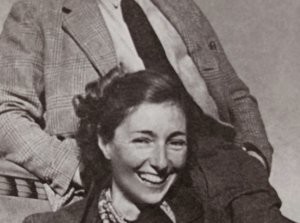
Christine Granville

Francis-Cammaerts-1944-204x300

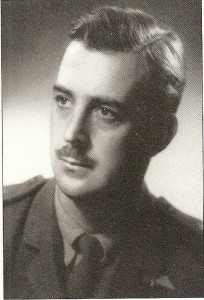
Francis Cammaerts


BooksPostsWorld War II

August 10, 2015

Make Way for the Spies

Tags: , , , , ,

Thus summer’s reading project is a continuation of what began nearly a year ago and continues without an end in sight: World War II. It began with the S.O.E. spies, broadened into the French Resistance and slopped over into the Nazis until I was reading pretty much anything about World War II except the actual military history. Here’s what I think about war: it’s stupid. It’s a bunch of arrested grade school children who don’t care they are destroying the earth and the people on it so long as one person wins and *national security* isn’t breeched. So reading about military strategy has never interested me. It’s appalling the glamour that exists around the military when their raison d’être is to kill other human beings.

Having said that, when something as ugly and deadly as fascism threatens what we think of as freedom, there is something poignant and compelling about the courage of people who would rather die fighting than let such brutal dominance move in on them. As soon as I say that I think of Magda Goebbels who poisoned her six children before her husband shot her and himself. I can understand the two adults preferring some control over their imminent deaths but Magda’s reasoning about her children was that they were better off dead than growing up in a world without National Socialism, that is to say Nazism.

Here is the place for a feminist rant but I’ll forgo that because I really want to do a bunch of book reports.

Of all my reading about World War II, my favorite is still Leo Marks’ Between Silk and Cyanide because it was so entertaining and so well written. Then Résistance by Agnés Humbert and Until the Final Hour (also called Hitler’s Last Secretary) by Traudl Jung because I admired both women and because they gave, respectively, a French and German perspective, something I was not used to.

Before I start gushing about the spies, I want to gather my thoughts about why there was a resistance in France in the first place. I noticed that reviews of Matthew Cobb’s The Resistance complained that it was more technical than most readers wanted. I was so well dug into my subject by then that I was gulping down details that would have been overwhelming six months’ earlier. But I liked his simple definition of the Resistance starting with “ordinary people who were angry, humiliated or ashamed. . . who decided to change things.”

In case you aren’t sure what these ordinary French people were angry about, here was the situation: The Nazis had invaded, conquered and occupied France in a matter of about six weeks, fast enough to make everyone’s head spin. The swastika was hanging off the Eiffel Tower. The Germans had requisitioned all motorized vehicles, heating oil, fire arms and most of the food. They had billeted themselves in private homes sometimes allowing the owners to remain, sometimes turning them out. The French were expected to finance the occupiers stay in their country.

France was divided into two zones. The northern half and the west coast including Paris and Bordeaux, was the Occupied Zone administered by the Nazis. In the southern portion of Vichy France –headquartered in the town of Vichy– French officials carried out the administration of Nazi regulations quite willingly. Marshal Henri Pétain, a hero of World War I, was in his 80s when he took over as The Savior of France. A conservative Catholic, he apparently thought that lax moral standards had invited the Nazi invasion. My mother would have loved him–as did many in France.

Not all. While Henri We Have Sinned Pétain was collaborating (his term), less grandiose people built up a resistance. Matthew Cobb writes that the Resistance only numbered about 500,000 people, but other authors have suggested that everyone in France either collaborated or resisted in one way or another. Resistance could be small: pretending to not understand German when approached by a German, wearing the French colors, listening to the BBC (which was illegal as was the radio). It could be medium sized: producing leaflets and tracts and leaving them on subways, cutting telephone cables. It could be large: blowing up bridges, hiding Jewish people, setting up escape routes.

Matthew Cobb describes the structure of the “official” Resistance that tried to corral all the small cells and circuits that spontaneously arose after the Occupation settled in. Jean Moulin, Henri Frenay, Emmanuel d’Astier, among others all had leadership roles within the formal Resistance and all tried to receive De Gaulle’s blessing from where he sat in London saying, “Moi, Je suis La France.” The squabbling that went on between the organizers, the communist resistance, and the British secret intelligence and De Gaulle would be amusing if it wasn’t so exasperating.

Inside S.O.E. by E.L. Cookridge and Resistance by M.R.D. Foot, both of which I read twice, are overviews from a  British point of view. S.O.E. refers to Special Operations Executive, a secret operation ordered by Churchill to engage in ungentlemanly (and unwomanly) warfare. It was the Dirty Tricks division of military operations.

Here’s something you can do: find out what Churchill commissioned the S.O.E. to do. It’s three little words and every book jacket, book review, and YouTube documentary can’t manage to avoid repeating it. I am sick of hearing it so I’m not going to repeat it.

And now on to the spies.

CurmudgeonFriends

August 1, 2015

My So-Called Internet Connection

Tags: , , ,

Comcast changed its name to Xfinity (why?) a long time ago, but I still think of them as Comcast. Or more often, “Fucking Comcast.” For purposes of this narrative the company shall remain Comcast. Expletives may or may not be deleted.

Several months ago Comcast began pushing a new and faster modem that would enhance our Internet experience a hundred fold (not exactly their words.) And entirely free! I showed Gwen, who knows something about just about everything my third notification for this miracle modem and asked her what she thought.

“Is there anything wrong with the modem you use now?” she asked.

“No, it works just fine.”

“Well, then.”

“Maybe I’ll just have one sent to me—since they’re free—but I don’t have to use it.”

“Well don’t try to fix what’s not broken,” she said, although significantly she did not wash her hands. She still has to live across the street from me.

The modem arrived. I put it in a closet and there it sat for weeks.  Then my computer started behaving erratically. In an effort to act like I understood computers, I made several of what have since become known as “unauthorized visits to the control panel.”  Predictably, things got worse.

Gwen gave me the better part of two afternoons trying to figure out what was going on, even though her expertise is with Macs. (And by the way, I get tired of Mac owners who say, “I don’t ever have problems with my Mac.” But I get even more tired of hearing, “Oh I let my husband handle all that.” Gwen, for the record, doesn’t say either.) She took my PC back and forth from my house to her house trying to ascertain if my problem was with the computer or with the network. Results inconclusive. But Gwen said “Oh for Pete’s sake” several times which is tantamount to anyone else saying, “FUCK it!” and kicking the dog so I thanked her for all her help, support and time and released her.

My former neighbor, David who used to work at Microsoft came over and fiddled for an afternoon with the computer. He left it installing the 135 updates it had somehow overlooked although events were to show that I had scrubbed away those updates by running a registry cleaner too often and at the wrong times for the wrong reasons. This is something I am able to do without even going into the control panel.

Meantime, my friend Mike, computer geekus and husband of Susan, the wittiest woman I know and my copy editor, said he would be happy to install the new modem for me. At the weekend after my lovely four days on Whidbey amongst deer, birdsong and people who live off the grid in a yurt, Susan and Mike came over. As it happened, it was that first awful weekend when it was in the high nineties and garden tomatoes turned red overnight. Susan brought a bag of mint leaves and we made mojitos and sat in front of the fan while Mike installed the modem.

Comcast says “all you have to do is plug it in,” but I don’t know of a single case where it was that easy. On this hot afternoon it took several hours and five phone calls. At some point during each phone call Mike made a speech to the cretin on the other end: “I am using a cell phone since the phone service is dis-connected and when you put me on hold, I am forced to pay for extra minutes.”

“Is he upset?” I asked Susan.

“No,” she said. “He does that all the time. He loves it.”

It was a hot, miserable day but there’s a glow of mojitos (I had four) around my memory of it. Gwen came over before we ran out of rum and I thought how nice it was to be among friends and to have Susan take over the making of the mojitos. I drank and smiled at my friends.

After the new and improved modem was installed, I could no longer stream movies. I could only send emails when I caught the server in a good mood. I lost my connection over and over. “Connection has timed out” and “Server not found–” I saw those screens a lot.

I called Comcast. I am always sorry when I do this. So, I think, are the customer service people who have to talk to me. This call began as usual by my asking the person on the other end of the call to please speak more slowly. That was the end of civility on my end. She led me around my computer trying this and that and as her accent thickened and her wpm increased, my frustration rose until every other thing she said to me was “Ma’am, please stop crying. I am trying to help you.”

Finally she passed me on to someone in Nebraska who spoke slowly. He hacked into my computer and ran circles around me while I fanned myself, blew my nose and calmed down. Finally he said that there was something wrong with the modem. He gave me a reference number and told me to swap out the current piece of crap at the Comcast store.  I said I wanted my bill to reflect that I’d been a week without the internet service I was paying for. He said he’d make a note.

There were email consults amongst Gwen, David, Mike and now Joan, my friend with the theological chops who is also a computer geekess. I took the computer to Joan’s house so she could see what might be going on apart from the modem situation. She had bronchitis and her asthma had kicked up and she was having trouble breathing but she took in my computer. So she’s also a saint. She noodled around while I sat quietly. (Gwen has taught me to do this.)

Finally she looked up. “Have you done something with the security?”

“A little,” I said. “The customer service with the piercing voice made me do it and I was crying so hard we didn’t finish.”

Joan kept my computer for three days. I had visiting rights so I could look at my email. Meantime I ordered the new modem and scheduled someone to come out and install it. Comcast service people were —not surprisingly—backed up nearly two weeks.

“You’re going to adjust my bill for the three weeks I won’t have had internet service, aren’t you?”

It took them five minutes to decide they would “make a note of it.”

Finally I went Zen. I get impatient with people who can’t let their cell phone take a message but I am just as obsessive with email and it was humbling to find this out. As soon as I came to grips with the knowledge that I am not so important that I have to answer emails within a minute of their arriving I became a calmer (and better) person. I learned that among my friends and acquaintances are people who look at their email once a day. That’s it.  I didn’t think it could be done.

On the other hand I am from a generation that not only didn’t grow up with answering machines, our phones were on a party line with neighbors. Not only did we not have to respond to every ring, not every call was even for us. It is possible to live at one’s own convenience, not to say one’s ability to cope. I started walking every day. I dug out the Brahms Intermezzo I have been working on for 100 years and started every day with it. I read for longer periods of time. I was in the garden more, I puttered around the house more, I sang more. I wasn’t as tired at the end of the day.

I was teaching my watercolor class the day the new modem was to be installed. We were painting under the lilacs when two trucks arrived.

“Wow, they’ve sent two of them,” I commented.

“For their own protection,” said Kay, my student and smart-ass friend.

They stayed an hour, installed a new modem, spliced something and messed around with The Signal. When they left I was no better off than when they came. I still couldn’t stream, still couldn’t do email. Joan decided the problem had always been the signal. She made an appointment with Comcast for three days hence and told me she would be there for it. Joan was by now not just breathing more easily, she was breathing on and polishing her sainthood.

My Comcast bill arrived. It was a bill for a full month’s service plus the service call to install the second modem. I called billing and explained as calmly as I could that I expected the bill to reflect the fact that I hadn’t had internet service from June 27 to July 14.

“That’s no problem, ma’am,” said a reasonable voice.

Her reasonableness sounded like complacency and it set me off.

“Yes, it is a problem,” I said. “This is the third time I have called about my bill. Either I’m not being listened to or I’m being ignored.”

She spent ten minutes researching my account. She told me that she had put through a credit and it would show up on my next bill.

Here’s where we are as of this writing. I have not gotten that adjusted bill yet. I string a 25 foot ethernet cord across my living room when I want to stream a movie. Joan and Gwen–independently of each other (as far as I know)– both commented that I did not have a personality compatible with computers. The next call I make to an IP is going to be to Century Link. And that yurt is looking really good right now.

Travel

July 27, 2015

Weekend at Windhorse

Tags:

It’s been a month of extremes, starting with a long quiet June weekend on Whidbey Island.  I stayed at Windhorse, a Buddhist retreat center at the end of a long road and situated in the middle of the woods. Perched on a hillside are three well-appointed little meditation cabins and the Buddha House, a large apartment with the meditation hall as its upstairs. At the bottom of the hill is the home of my friends who own the center, and who happened to not be there during my visit.

I have stayed in the Buddha House at Windhorse several times . I don’t go to meditate; I go to write. This time I also took my paints. I packed a lawn chair because there’s no really comfortable place to be out of doors. This is a meditation center, after all, not a resort.

Windhorse is somewhat of a deer sanctuary. It’s a safe place for man and beast. I feel it the minute I turn off the highway. On this trip I did a little writing and painting but I was completely distracted by some tiny twin fawns only slightly larger than my cats. Under the strict supervision of their mother, I never saw enough of them. In any case, for four days I lived in that lawn chair, bathed in bird song, watching the rabbits and growing used to the habits of the deer.

One deer came every night to rest in the cool dirt just down the hill from one of the meditation cabins. Others grazed at certain times of the morning and afternoon outside the door of the Buddha House. They were so beautiful and graceful as they reached through and ate the leaves of the trees that are fenced off. I learned to peek around the door and move slowly before I came out of the house because the deer were often very close.

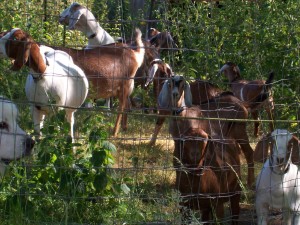
Every day I walked across to the next property to see the goats. I would stand at the edge of the fence and wait. First the big white dog would come over to let me pet him through the fence. Then the nannies and billies and their collection of kids trotted over, their funny little faces bright with curiosity. We’d all stand and stare at each other in silent communion.

Except for the animals, I was alone on the grounds of the retreat center. In an emergency I had been advised I could go down the hill, find the key to my friends’ house in the generator shack, let myself into their house and call the neighbor with the goats. Also I could address any questions to the mysterious couple who have lived off the grid, deep in the woods in a yurt for the past 30 years if I happened to see them. I did meet them both one day and to my surprise, they seemed like anyone I might meet anywhere on the island. I had rather expected mountain man and Annie Oakley.

There were no emergencies. Once before when I was alone at Windhorse and got a bit nervous, I imagined I was an S.O.E. agent hiding from the Nazis in a safe house and this was utterly calming. After all the World War II reading I’ve been doing, I rather hoped I’d get to take this imaginative flight again, but I felt completely safe.

Not just physically safe. On my last evening I made my visit to the goats. By then I had lost my curiosity value and they hardly looked up. All the rabbits I encountered froze when they saw me and bounded away as soon as they felt they could. The deer, while fairly comfortable with humans in the big bowl of the retreat center, weren’t going to let me pet them. They edged away when I got too close. All these animals going away from me, leaving me.

Next thing I was sobbing for Freud, my cat who died in my arms several months ago. Great, gulping sobs like I hadn’t cried in ages for anything. It can be frightening crying alone like that but I felt like the big bowl was holding me. I had brought my writing and my painting to Windhorse but when I finished crying, I knew that I had done what I came to do.

I came back to Seattle the next day. After a few days of civilization and technology, that yurt idea was starting to look very good. Stay tuned.

Goats Fawn 2 Fawn 1

PianoTeaching

June 26, 2015

Rachel, Lacie, and Addie Get Down

Tags: ,

This post might also be entitled “The Life of an Alfred Piano Course, Lesson Book One,” something only a piano teacher can fully appreciate.  This particular copy has sat on my piano rack off and on for 15 years, thanks to the Seattle Mennonite Church, which has supplied me with a stream of students over the years.

In the beginning it was Rachel’s book. Rachel now goes to work in a three piece suit, but when she was in grade school she took piano lessons from me.  She practiced her assigned pieces all week and when she felt she had learned them, she wrote on each page, week after week: “got down.”  Her circular cursive documented that she had nailed down “Lavender’s Blue,” “Classic Dance,” “On with the Show,” and nearly every other song in her first year lesson book.

Fifteen years later, Rachel’s mother referred me to another family who attends the Mennonite church.  Lacie arrived for her piano lessons with Rachel’s music books under her arm.  Lacie is a walking question mark in striped tights and purple sweaters.  “What if?” she always wants to know.

What if I get home and forget how to do this?

What if this page accidentally falls out of the book?

What if Rachel didn’t have a pencil and forgot to write ‘got down’ one time but she got it down anyway?

Lacie and I had been working together for nearly a year when her cousin Addie began lessons.  When Lacie finished book one, it was passed on to Addie.  By now each page was annotated with two dates, two sets of stickers, “got down,” and the name Lacie.  I began adding a third date and the name Addie.

That was okay at first but after a while Addie objected to Lacie’s name being there.  I didn’t ask why, it was enough to just keep Addie focused on what we were doing.  I thought for a minute.

“Okay, Addie, watch this,” I said.

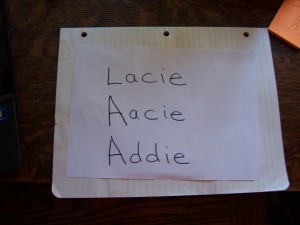
I extended the long line of the “L” of Lacie and added another joined at the top to create a lopsided A.  I put lines on the right side of the “a” and the “c” to create two “ds.”  Addie appeared.

Addie shrieked!

“Do it again.”

It was kind of fun. I did it again.

“Let me do it,” Addie said.

I watched Addie turn Lacie into Addie.  We both shrieked.

“It’s the magic name,” I said.

Now we do it every week—several times—and Addie never tires of it.  I never tire of it either.  And we still shriek. Every. Single. Time.

On these warm summer nights I sit outside right before bed and do a crossword puzzle.  I have never been much of a crossword puzzler.  I am learning to do them now because I am tired of my friend Nancy beating me at Lexulous by hundreds of points and I think this might help.  I consider myself a beginner just like Rachel, Lacie and Addie.  When I finish a puzzle without having to look up any words in the solutions, I write on the puzzle “got down.”  And smile to myself.

100_2412 (2)


Ah, HumanityCats

May 11, 2015

Chocolate Poo

Tags: , ,

My first thought here is do I want to write about this?  Do I need to make my weird private habits public?  People who have read my memoir will say that page is already torn.

Two weeks I lost my Freudy, a cat I had wrapped my heart around.  He started to fail and within 24 hours had died in my arms.  The initial shock lasted that first day.  The second day was harder as the feelings started to thaw.  By the third day I began on what were to be pounds of M&Ms, a product I don’t even like ever since I got acclimated to 72% cacao.

But M&Ms have traditionally been comfort and stress food.  Cheap, sweet chocolate with an extra therapeutic advantage: I get the peanut M&Ms, and since I don’t like peanuts, I suck off the layers of candy coat, then the chocolate.  Then I spit out the peanuts to be collected in a pile and distributed to the squirrels to keep them out of my fruit trees.  Those of you who are orally oriented will appreciate the aggression of sucking off the chocolate and spitting out the peanut.  The rest of you won’t get it.

The week after Freud’s death, I went through pounds and pounds of peanut M&Ms.  When I got to feeling thoroughly sick of them (and of myself) I continued through another few bags and finally ground to a stop.  For a day or two I ate an exemplary diet while the waves of grief crashed around me.  When I couldn’t endure the feelings any longer I went back to a comfort/stress food that predated the M&Ms.

Chocolate Poo.  That’s what I called it in college. I grew up in a family that didn’t buy things like candy or cookies.  We didn’t buy anything that could be made (more cheaply) at home.  Pretty much all junk food that came out in the 60s: Fritos, Oreos, Lucky Charms cereal et al were dismissed by my mother with the joy-quelling words, “We don’t need that.”   So when I went to college I was still oriented towards making, not purchasing.

Chocolate Poo is essentially chocolate butter cream frosting.  Ingredients are chocolate, powdered sugar, butter, milk, pinch of salt and splash of vanilla.   When I make it for a cake I call it frosting.  When I make it for comfort food, it’s Chocolate Poo.

When the M&Ms palled, I remembered my atavistic comfort food, Chocolate Poo.  I had some incredibly healthy, organic baking chocolate in the house, some salt and the vanilla.  I had to get the powdered sugar, butter and milk.  I creamed the butter, added the powdered sugar, chocolate, vanilla and salt, and then slowly dribbled in the milk until I had the primo comfort consistency.  I carefully cleaned off the blade of the food processor and licked my finger.  It didn’t taste quite right.  A quarter of a cup later, I decided the incredibly healthy, organic chocolate ruined it. I threw out the Poo.

The next day I bought some Nestles’ semi-sweet chocolate chips, thinking they would elevate the flavor to comfort level.  They didn’t.  Maybe it had been Hershey chocolate I used at school (and the next several decades.)  The day after Nestles’ I bought a can of Hershey baking chocolate and more powdered sugar.  By then I felt like everyone in the city of Seattle knew what I was doing.

The last batch of Chocolate Poo still wasn’t quite right but was close enough. And there were still chocolate chips left, which are a kind of auxiliary comfort food that my therapist once memorably referred to as “little nipples.”

I’ve cried through all these iterations of Chocolate Poo because chocolate really isn’t strong enough to suppress the feelings invoked by knowing that my little guy is gone and he isn’t coming back and I am very, very sad.  Comfort food is a futile attempt to get some relief from all the sadness but I keep trying.

Cheetos used to be quite satisfying. I wonder if they are hard to make.