EnglandFamilyLiteraturePoemsTravel

January 26, 2020

Further Adventures on the Cornish Coast

Our Celtic Spirituality Morning gave way to lunch at The Cook Book in St Just. Once a bookshop/café, now it’s a café with books for décor. I ordered a plated salad after it was explained to me that a plated salad is salad on a plate. I had an image of latticed and braided vegetables but it was just a salad—a good one—with about a pound of cheese on the side.  I ate one hunk and we put the rest in an omelette in the evening. In conception an omelette but one that turned into scrambled eggs as mine so often do.

On the way back to Morvah I announced I was going to take a nap the minute we got home.

“You have to bring in the washing first, “Sue said.

We all brought in the washing and we all had a rest before the omelette cum scrambled egg and frozen potato waffle, which are like French fries (chips) only waffled. We had a time figuring out the broiler for the waffles. I dropped out early and went for Alec who wasn’t home.

“He won’t know. He’ll just come in and tell us it isn’t working.” Sue again.

Someone (not me) found the right buttons in the right order to get the thing to heat.

Finally we set off for the Minack Theatre where I would be collecting on part of this year’s birthday present, the other part being the most gorgeous box of artisanal chocolates I had ever seen. The Minack is an open air theater built into the Cornish cliffs and looking onto the Atlantic Ocean. It was built by Rowena Cade in the early thirties. For two years, she and her gardener moved granite boulders and earth from the cliffs below her garden to create terraces. Since then it has become a celebrated setting for plays, recitals and entertainment of all kinds.
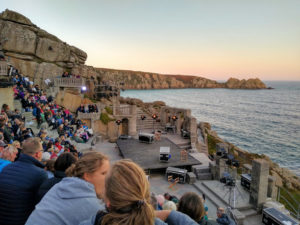
The Minack Theatre

The play we saw, Stones in His Pocket by Marie Jones uses two actors to play all the characters. They moved quickly from one character to another by use of a gesture, a turn or in the most obvious of cases –to everyone but me—switching between blue and a red cap. Wendy was later incredulous that I had missed the significance of the red and blue caps as (apparently) the entire plot hinged on them.

In my defense I must say that the setting of The Minack was distracting. Sitting on the headlands on the edge of the sea, I watched the waves and gulls and the sinking of the sun into west, muting the edge of sea and sky until everything was dark except for the stars and of course the stage lights, which didn’t seem all that out of place. With all the external drama, my wandered in and out of the play.

We were bundled up though it was a mild night for mid-September. A group of young German women, in their late teens, sat in front of us. Before the play started we saw that one of them was crying and her companions were rubbing her arms and talking earnestly to her.

Suddenly Wendy up and offered them one of our blankets. “Is your friend cold? Would you like a blanket? We can share.”

I thought, “Wait a mo’. I don’t want to be cold.” In truth I was positively sweating with four layers on top and two pairs of socks, a scarf, a hood and a blanket , which I felt compelled to share with Wendy as the price of sitting next to someone so thoughtful. She also got half of Sue’s blanket so for her kindness she got double warmth. Quite right.

When the subject of the young women came up on the way home, Sue said “She probably cries all the time and whines about everything and they’ve figured out how to humor her,” which made me burst out laughing.

An enormous harvest moon guided us home and a tailgater lit us up from behind.

The next morning Sue popped her head round my door to say, “Oh Elena, you’ll want long pants. There are stinging nettles” and I had that sense of being a seven year old with my parents. We were to walk the cliff path that begins with the public footpath next to the church and hooks up with the Cornish Coastal path. The rugged coastal path extends from Minehead up in Somerset all the way around Cornwall to Poole in Dorset. Parts of it are easy but parts have huge boulders to negotiate and an unforgiving rocky path. Wendy has walked a good deal of the coastal path. Her assessment of our little bit was that it was of middling difficulty.
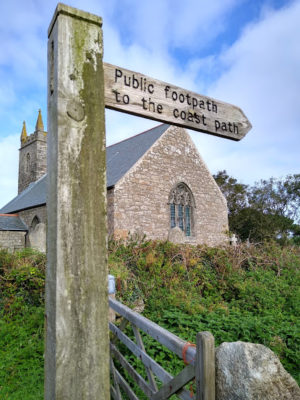
St Bridget’s Church, Morvah

I told Wendy and Sue about my nurse friend Susan who looked me straight in the eye and said “DON’T FALL.” We laughed about it but there was method. I didn’t lark about on the cliffs and I walked carefully on the paths and over the boulders, her words in my mind.
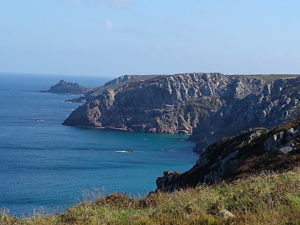
Coastal Path, Morvah

We were working our way along when into the beauty of the stark blue sky and the rugged black headlands strode a man wearing nothing but hiking boots and briefs. Brief briefs. Practically a cod piece. He paraded past us at the intersection of the foot path and the coastal path. Before we’d recovered our surprise another man came into view from the north.

“Here’s another one,” Sue said.  “This one has clothes on.”

The second man passed us chuckling.

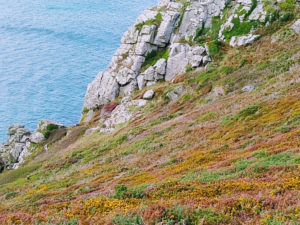
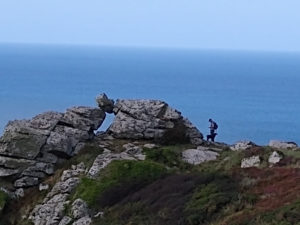
We walked a different piece of the trail when we visited Zennor and this became my favorite walk. My poetry for this trip was Rilke’s Duino Elegies. I never got past the first elegy and I puzzled over the words. Standing near Zennor Head watching the dark of the sea burst into white spray against the black rocks, astonished by the colors in the carpet of wildflowers and gorse, hearing the fierce wind, feeling the warm sun, I thought I understood Rilke’s words:


Beauty is nothing but

The beginning of terror, that we are still able to bear

And revere it so, because it calmly disdains to destroy us.
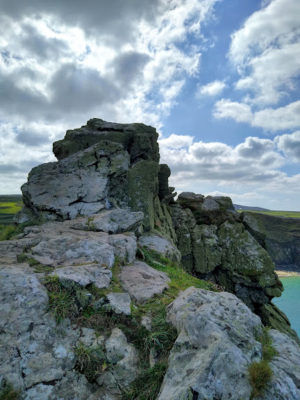
 

Zennor Head
 

Wildflowers, Zennor
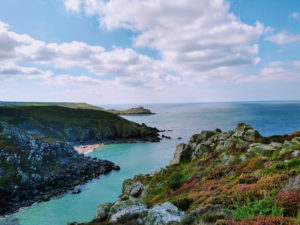
Path at Zennor
EnglandFamilyTravel

January 6, 2020

Celtic Spirituality Day

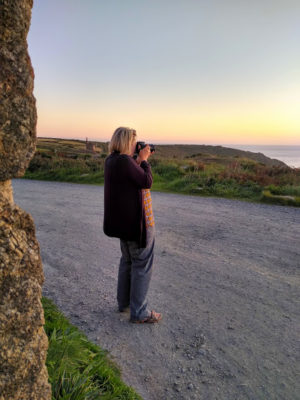
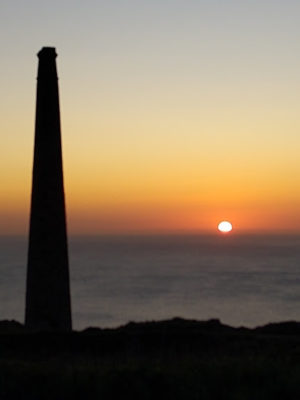
Wendy drove as fast as she would allow herself to get to the Botallack mine by sunset. The evening was cold and the wind never stops blowing in from the Atlantic. Yet quite a large group had gathered. A young woman sat cross-legged on a rock that jutted into the sea and waited. Others waited in their cars, still others clutched their coats and watched. Wendy was one of the former, this not being the first time Sue had photographed the sunset. I was one of the latter mostly because I like to watch Sue photograph. The atmosphere and the drama of the setting sun was magical.

At the Botallack Mine

Sue at Botallack

Moving to more mundane matters, I bought bicarbonate of soda in the Pendeen shop to sprinkle in my shoes, which still stank. I coated both shoes and left them out in the Cornish sea air. I used my new foot salve, Socks, and went to sleep. In the morning I put on sandals, my only other pair of shoes. I fought my way through the cousins to hang the wash on the line. We had done colors on this morning and whites yesterday.

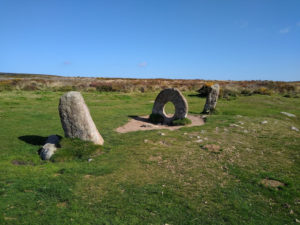
Today was Celtic Spirituality morning beginning with Men-An-Tol, megalithic remains that looked quite sexual to me. A holed stone and two phalli plus a kind of wilted one that leaned over. Close to Morvah, it was still a bit of a walk off the main road.

Men-an-Tol

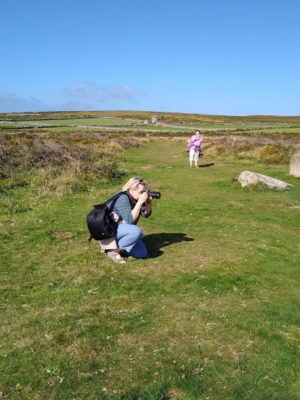
Sue at Men-an-Tol

These strange ancient sites make me feel like a three year I once babysat. He heard some opera and asked quizzically, “What is that?” Coming from the the west coast of the U.S. where Caucasians have been around less than 200 years, I hardly know what to make of this antiquity. I do know that when I am in their presence, I feel a kind of Presence but then I don’t know what to make of that. So I stood in the Presence and then I took photos. I watched Sue taking photos, then I took photos of Sue taking photos.

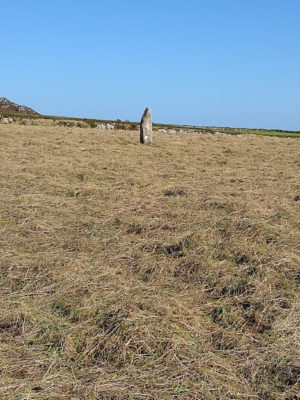
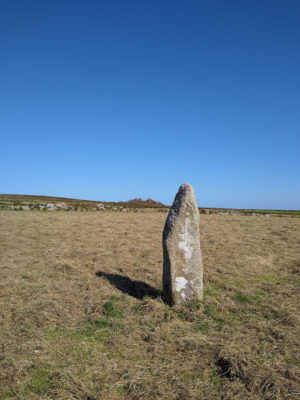
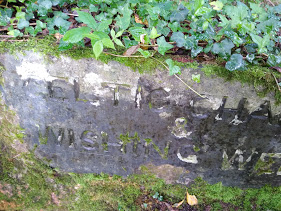
Up the road from Men-an-tol is Miscellaneous Standing Stone in a Field, which –after I had communed with it—I learned was called Men-scryfa or “stone of writing.” It stands there like a still life with the presence of that terrifying statue of Dante in Florence. Or “Christmas Yet to Come” in Mr Magoo’s Christmas Carol.  See? I don’t know what to make of these stones. There is an inscription on the stone that seems to call itself (in Gaelic) “grave of Rigalobranos, son of Cunoualos.”

Men Scryfa in Field

Men Scryfa and shadow

I set off through the hay drying in some poor farmer’s field because people are going to trample it no matter what. Wendy and Sue waited at the gate telling me to not come back until I felt The Aura. Sue presently came in. We stayed until interrupted by a couple with cameras.

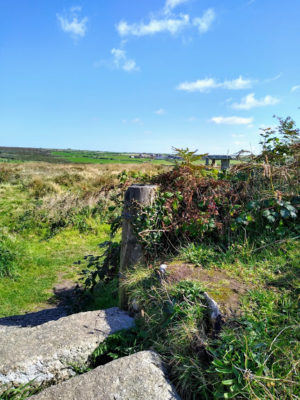
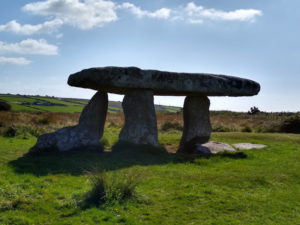
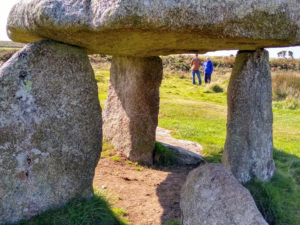
Pursued by a tractor, we carried on down a different road to Lanyon Quoit, a dolmen. As far as I can make out, a dolmen is a table made of three stones and a quoit is the top of the table. So they are basically the same thing except they aren’t tables at all. They are the remains of a tomb: two tall stones supporting a flat one, in the case of Lanyon Quoit, three tall stones. Lanyon Quoit can be seen from the road but to actually get to it, we traversed a brick stile and walked up a wide green path.

Again the sense of Presence, nothing particularly mystical, but old, tired and a little sad.  “The still, sad music of humanity” as Wordsworth said about Tintern Abbey, a much younger ruin. I felt it in spades when I stood inside the quoit and looked out at 21st century people taking photos on a windy, sky-blue day.

Turnstile to Lanyon Quoit

Lanyon Quoit with dramatic lighting

Lanyon Quoit with tourists

We passed a father and his little girl, aged around three, on one of these pilgrimages. He held her two dolls while she picked blackberries from the hedgerow with patient attention to every detail of what she was doing. Children can be masters of mindfulness. It’s irritating.

But it gave rise to a conversation about spoken English. Wendy and Sue say “black-brie” and I say “black bare ee.”

“See? You draw your words out,” Sue said.


For the rest of the day I  muttered, “Black-brie, blue-brie, strah-brie, rahs-brie.

We discussed the way the English add questions to the ends of statements almost like a tic:

“I didn’t notice that lot in the chapel were smoking, did I?” I recited. “You tag little questions like that.”

“Do we?”

“Hmmm.”

That’s another English thing, the “Hmmm” that goes up in pitch and then down. I think it means “I heard you and I’m not particularly interested.”

“Quite” is a quirky word. Something that is “quite satisfactory” is just barely satisfactory. “Quite a pretty little bird” means the bird is lovely. “Quite right” is a vote of solidarity with the addressee:

“Finally I turned around and said to them, I bought a ticket to hear the music, not you!”

“Quite right.”

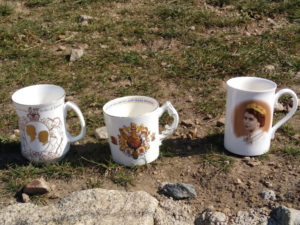
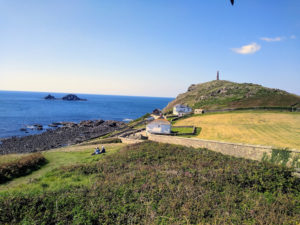
On to the glorious expanse of Cape Cornwall, a National Trust reserve where walking trails take one to the highest point of a headland and the Coast Watch. We finally got our morning cup of tea in bone china cups at the tea hut and sat on logs in the warm sunshine.

Bone China mugs

Apparently a caravan i.e. trailer called the “Little Wonder Café” used to park at Cape Cornwall during the warm months. One could get cups of tea and “normal food and hunks of cake and lovely local pasties.” Now all that’s left of the Little Wonder caravan is a permanent shelter that sells posh food with truffles and cilantro and the bone china cups. I thought I would never hear the end of it from Sue and Wendy: “And there was a caravan and a lovely block of toilets.”

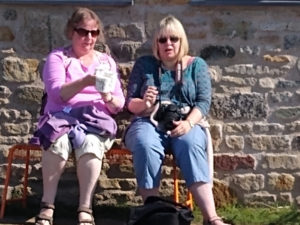
We had our cups of tea and I took a photo of them sitting alongside the tea hut, probably grumbling about the old days when there was a lovely block of toilets. Later I googled the Little Wonder Café at Cape Cornwall and found that Wendy and Sue weren’t the only grumblers. It was a beloved institution.

Wendy and Sue grumbling about the cafe at Cape Cornwall

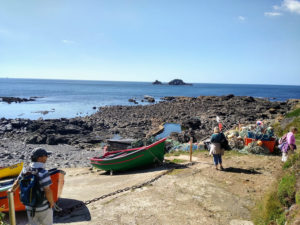
At the water’s edge, Wendy and I sat in the sun watching Sue photograph kelp and boats. We talked about family—we are still trying to untangle our tenuous connection.

“You feel so familiar, Wendy. Comfortable and welcoming.”

“Well, you’re family, aren’t you? We quite like having an American cousin.”

I believe the “quite” in that sentence means lovely, not just barely tolerable.

I was reminded (as we watched Sue meticulously focusing and clicking) of the patience of the English. Or maybe it’s partly being out of the city. Or Cornwall herself. A calm rhythm dances even in the mining and farming districts that are fading out. Islay was like that, too, but Cornwall feels in my bones.

Sue photographing at Cape Cornwall

Cape Cornwall

Choir SingingEnglandFamilyFriendsMoviesSingingSongsTelevisionTravel

November 18, 2019

Welcome to Port Wenn

Welcome to Port Wenn! If you are a fan of the series Doc Martin, you’ll appreciate the reference. If you aren’t, read on. We went other places, too.

The day began at the cottage in Morvah with the usual tea and breakfast and me asking Sue and Wendy what they remembered from the day before while I took notes. The forecast was for a day of clouds and rain but the day was clear and warm. We did a washing and while I was doing my stretches, Sue pegged it on the line.

“You are determined to not let me do the washing, aren’t you?”  I fixed her wagon though, I did the breakfast dishes.

My glasses were a worry, also irritating. I could see the blob of cello tape hanging off the left arm and I checked it constantly to make sure it was hooked behind my ear. Sue’s temporary filling replacement sat on the kitchen table pending real need for it. Wendy was still fine.

We drove up the coast to Padstow, home of the Obby Oss festival. Sue said it was mostly a chance for people to get drunk although she thought there were some who appreciated the ancient tradition. The ancient tradition probably involved people getting drunk, too, as that is not a new phenomenon.

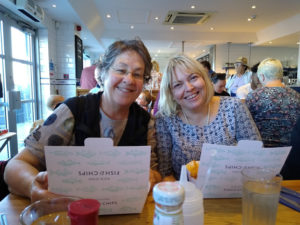
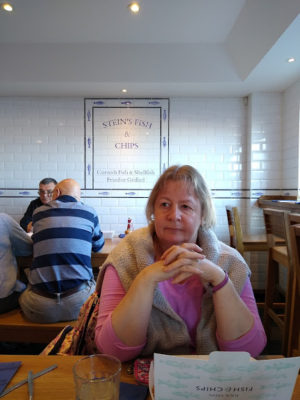
Padstow is sometimes referred to as Padstein because apparently the celebrity chef Rick Stein practically owns the village. We had tea at his café and fish and chips at his chippy.

Elena and Sue at Rick Stein’s chippy

Wendy across the table from Elena and Sue, probably wondering why she had to be on holiday with such adolescents.

We sat family style at the table; our dining companions were two women dripping with pierces and with shaved heads except for pony-tails sprouting at the top. Their presence prompted a text message between Sue and me, something I swore I would never do, that is, sit next to someone and text them instead of talk. I had become one of Those People.


S: Is it acceptable to say to the person opposite ffs chew with your mouth closed?

E: What is ffs?

S: For fuck’s sake

E: I wouldn’t mess with someone with that hair-do

S: It’s a ‘do?’ I thought it was a tragic accident.

Snorts.

Later Wendy said she thought they seemed like nice people talking about normal things who just looked different. This made me feel contrite. I don’t think it did Sue.

On to Port Issac. Another village, another car park but this time, no bus. The streets of Port Issac are too narrow and too steep. The car park was about half a mile from the village and straight down, which also meant straight up on the way back. I understand that a month before Doc Martin films, two of its stars, Dame Eileen Atkins and Ian MacNeice move in and start walking the streets to get into shape. Wouldn’t that be something, to come out of your cottage in a little Cornish fishing village, say hello to the Dame and continue with your day?

As we came down to the harbor, I could see that the tide was out and the boats were beached. At the first shop, I bought a DVD of Fisherman’s Friends, a movie Sue and Wendy introduced me to my first night with them back in Butleigh. It’s the true story of a bunch of fishermen from Port Issac who became famous singing their sea shanties. The movie was made with actors (one of whom I despise but I won’t say which one; it’ll be Sue’s and my secret. And Wendy because she hears everything. But I don’t think Wendy cares about Sue’s and my little foibles.)

In any case, the singing is wonderful and the real fisherman are the ones at the start of this clip. You can believe that the OK Chorale will be singing this song next quarter:

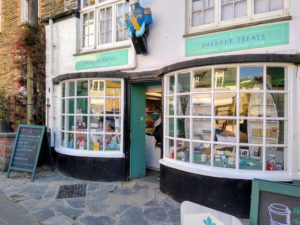
For those not familiar with Doc Martin, the show is filmed in Port Issac but is called Port Wenn. The locale is used so lavishly and it was so familiar, I felt I had lived there all my life. There was the coast guard station, the school, the harbor and the fish processing building which smelled as bad as my shoes that were currently airing outside the cottage in Morvah. There,too, was Mrs. Tishell’s pharmacy, which off script is a confectioner’s shop. The fellow inside was happy to chat about being the setting for a famous TV show. He gives up his shop when there is filming and it is made into the pharmacy. He told me about Eileen Atkins and Ian MacNeice walking the hilly streets and he said Martin Clunes is (unlike his character of the Doc) gregarious and always surrounded by people and dogs. Everyone in the village has had their picture taken with him.

SweetShop/Chemist


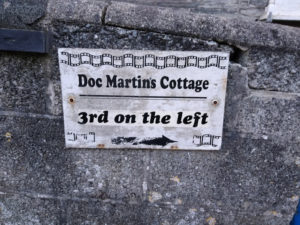
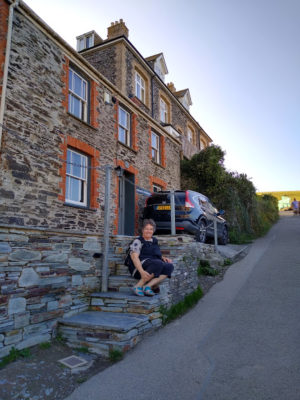
Finally we went up the steep street to the Doc’s. I sound be-sotted but I don’t think I’m alone, although with Wendy and Sue, I was. I’m not sure they’ve even seen Doc Martin.

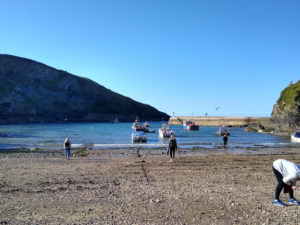
After these moments of complete indulgence of me, we walked on the beach. I photographed Sue photographing the boats and we all three found sea glass. It was a long walk back to the car park and a long drive home but we made it just in time to see the sunset at the Pendeen lighthouse, which deserves to figure more prominently than at the end of a day of me slobbering all over Port Issac. So, til next post.

Elena at the Doc’s


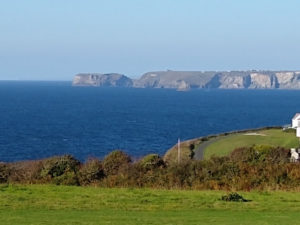
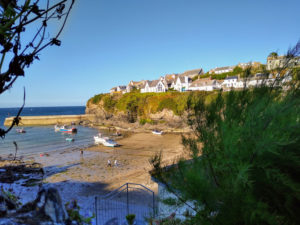
Headlands, Port Issac

Port Issac Harbor

Port Issac Harbor

AnglophiliaEnglandFamilySongsTravel

November 3, 2019

Morvah, Madron and Mousehole

Monday morning–my first sugarless day– I was awakened by the sound of birds singing and cows moo-ing:

Since I was still the only one up, I went round the cottage filming the window fixtures and talking to myself:

When I finished this catalog of domestic quotidian, I took off my glasses to polish a lens and unaccountably snapped one of the arms in two. I looked at the two pieces in my hands and thought, how could this have happened? The arms are made of titanium! I taped them together with sticking plaster (that’s English for Band-Aid) and the broken side flopped on my ear like the wounded wing of a bird.

Meanwhile Sue was up and had broken a tooth and a filling had come out.

Wendy was okay.

Then I noticed that my hiking shoes reeked of something foul. At first I blamed the peat of Scotland but later decided that it had to do with them being cooped up in an airless bag for two long. I put them outside the front door to take in the sea air. By the time I discovered my shoes smelt and had made the general announcement that I was parking them outside (no one cared), Wendy and/or  Sue had done a washing and Sue was taking the clothes to the clothesline in back.

By now we should be having our morning tea and cake but we hadn’t gotten out of Morvah so we walked around the corner to the old Morvah Schoolhouse, which has become a Café and Gallery.  Wendy and Sue scored over me with their lemon drizzle cake (which is a thing, lemon drizzle cake, a Mary Berry thing) saying that it had neither sugar nor gluten in it. I ate my oatcake and bought a bar of lemon soap because I couldn’t have the lemon drizzle.

After we left I was surprised to hear Wendy and Sue’s assessment (complaints) of the experience. The server had certainly taken her time and she had barely looked at us or asked if we needed anything else. She was too busy talking to her colleague who had come in with a pile of vegetables. Said colleague was the same person who had (supposedly) cleaned our cottage and Sue said she had done a slapdash job or words to that effect. But apparently the lemon drizzle had been good.

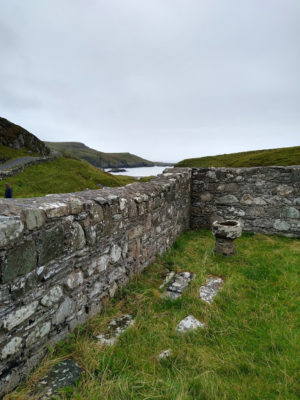
While we were in the neighborhood, we visited St Bridget’s across the road from our cottage.  It’s was a tiny little sanctuary, freezing cold and smelling damp and old. Catnip-stuffed church mice were going for a couple of pounds a head. I bought four for some of my cat friends. Then I played “Roll Out the Barrel” on the pump organ.

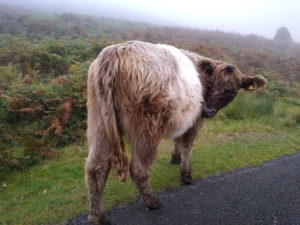
I visited Alec’s enormous cow, Doubtful, and the chunky little Neptune. Doubtful was feeding ferociously near the fence. She took one repressive look at me and continued crunching. Neptune froze a little way off, then advanced, stopped and watched me for whatever most worries a cow about a middle-aged woman cooing from the side of the road.

I asked Sue and Wendy what was the most noticeable thing about my American accent. Sue said it was the way I drew out all my vowels. British vowels are more clipped and with fewer diphthongs. I tried speaking more clippy and Wendy said I sounded like Miss Piggy. We were to have many conversations about the differences in American and British speech and I spent a lot of time muttering to myself trying to zero in on the pronunciation of words.

This first conversation about speech took place while we were trying to find the Madron well. (Madron is accented like Madris, something else I muttered to myself whenever we talked about Madron or passed road signs.) This Madron well was something I had read about; Sue and Wendy had gone looking for it but so far hadn’t found it. The guidebooks are coy about exactly where it is and Google maps is hopeless. The gist of all our sources was that the ancient Madron well is in a field off a path. There’s a sign on the road that gestures toward the path so we parked and set off down a lane, which turned into a path arched over with still green trees and bushes and which pulled us into a wood.

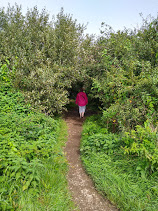
path to the well

A mile in we came upon the ruins of a Celtic chapel with a nave and a well but not the particular well we were looking for. A half dozen young people were hanging about in the ruins, reeking of weed and acting stupid so we continued down the path. We could see fields beyond the woods but nothing to indicate which field contained the sacred Madron well. Finally we came upon a hole with a stone covering it.

“This looks like a well,” Wendy said. “Could this be it?”

Sue looked at her scornfully. “Is this a field?” she demanded.

Celtic Chapel and Wishing Well sign

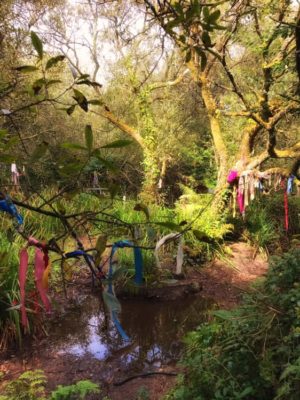
We gave up on the field and the well but as consolation we saw the Cloutie Well. (pronounced “clootie,” which means cloth.) Colorful strips of cloth hung from branches and twigs that grew around a pond. As the clouties disintegrate in the wind and rain, the ailment they represent leaves your body. I tied up a tissue  because I didn’t have any clothes I wanted to rip for even such a worthy cause as arthritis. It was a used tissue and Sue said that wasn’t very respectful.

Cloutie Well, Madron. Photo by Sue Cooke

From Madron we carried on to Mousehole, one of the many charming fishing villages on the Cornish coast. At Hole Foods (get it?) I had a gluten-free pasty that had to be the finest meal I had ever eaten but then I was hungry and hadn’t had any cake.

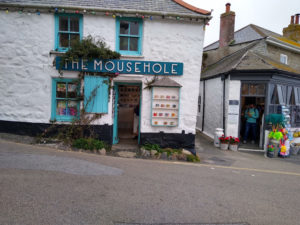
The Mousehole is a shop that I remember from 1980. The woman running the shop seemed to have been there since 1980 without sleep, a meal or even a wee break. (Wee is English for pee.) She followed me around sighing loudly every time I left a card so much as a quarter inch askew. She followed me into a section of lotions where I picked up a little pot of foot salve called “Socks.”

“That’s for feet,” she snapped contemptuously (or so it sounded.)

I wanted to asked, “Does that mean I can’t buy it?”

Evidently it wasn’t just me who who buzzed her antennae. Later Sue said she felt like saying to her, “I’m going around the corner now. Do you want to follow me to make sure I don’t steal anything?”

We finished the day in Penzance where there was no joy for my broken glasses (no pirates either for any of you who would appreciate knowing that.) I was still held together with sticking plaster, which a helpful optician made worse by adding a blob of cello tape (that English for Scotch tape.) Sue got a temporary filling kit at Boots. 

We came home tired and pulled our day’s bootie out of the car. I raced Sue to get the washing off the line and we draped the damp clothes on all the radiators in the cottage. Then cups of tea.

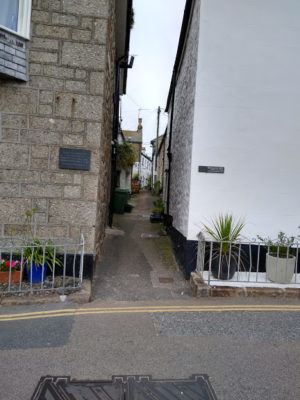
A Mousehole Street

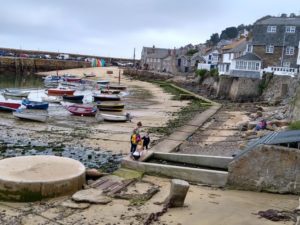
Mousehole Harbour

The Mousehole


EnglandFamilyTravel

October 27, 2019

A Sunday in St Ives

Sunday was my day of reckoning for all the cake in my system. In the morning we drove into St Ives, Wendy parked in the car park and we rode the shuttle bus into the heart of town. The car park/shuttle is really the only solution for these villages with narrow streets never meant for cars, much less cars going two ways. The bus itself nearly scraped the buildings on both sides of the road. Parking was free but it cost a pound to ride the bus. “Ta. Cheers. Thanks very much. Cheers.” The bus driver scrutinized the pound coins and dropped them in his till.

We walked down the hill and had a wander on the main street, which I presume was the High but there weren’t the usual signs. It was more a matter of, “it’s near the church on the corner.”

Wendy homed in on the Yummy Scrummy Cafe. Wendy is the undisputed champion of finding the best cafes. This one had a gluten-free courgette and carrot cake with thick buttercream frosting, which was damn good. Did I mention it was still morning?

We poked in the shops: Poppy Treffry, White Stuff, Whistlefish, Fat Face.

Sue and Wendy

Wendy and I paddled (that’s English for waded) on one of the five beaches St. Ives is built around. We had lunch at one of Wendy and Sue’s favorites: Pizza Express. It’s reliably good; I just wish it didn’t have such an American-sounding name. Pierces my illusions of Miss Marple.

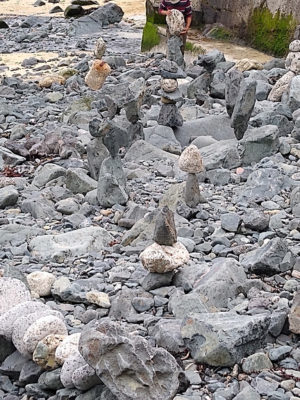
We were in St Ives during a two week arts festival. Evidence was around every corner, like the Kernow Samba drummers (who were mostly middle-aged women and very good with the intricate rhythms) on a stage where the High St emptied onto the beach. At the Rock Balancing Park a pirate-y looking bloke balanced a huge lump of a rock onto a pointy one, then sat back and kicked his heels against the wall and looked insolent. He waxed eloquent about his carefree life: “This is it. The air, the sea. Life is free.” Blah Blah.

Rock balancing Park

As we trudged up the hill Sue muttered, “He obviously doesn’t have a mortgage.”

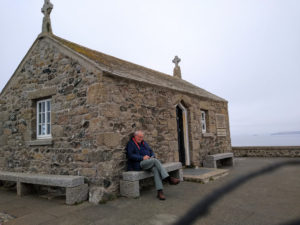
At the top of the hill, we went back into town, then started up an even steeper hill to the Coast Guard watch station and St Nicholas Seamen’s Chapel, a dear little place that was unfortunately locked.

Seamen’s Chapel of St Nicholas, St Ives

But we met Frankie, a spaniel/retriever who had found an outlet for his talents. He charged up the grassy hill with a red ball in his mouth, dropped it and watched with great anticipation as it began to slowly roll down the hill again. When it picked up speed, Frankie charged after it and brought it back. His owners said he had already been at it 20 minutes when we walked by. Sisyphus should be so happy.

At the Co-op across the street from the bus stop we brought provisions against the day we would not see another shop, which we did daily. By the time we had gotten off the bus at the car park, the mist was rolling in from the sea. On the drive home we couldn’t see three yards in front of us when out of the mist were suddenly cows on the road. Wendy is a careful driver and no cows were harmed in the course of our journey. Sue and I photographed some hind ends and I moo-ed at them.

Trebeigh cottage was cold and damp when we arrived home. I went across to tell Alec we were getting nothing but cold air out of the radiators. He came back with me smelling like he had been enjoying his Speyside single malt.

“Well, the heat’s not on,” he told us. “The radiators aren’t on.”

Not knowing how to respond to this, we looked at him.

“I drained one radiator but the heat hasn’t come on,” Wendy said.

“Why’d you do that?”

Wendy and I looked at each other.

Finally it was discovered that the thermostat batteries had died. Alec went out to his magical holiday cottage shop to get new ones.

We got the heat going. I took a hot bath and had a mini bottle of Bowmore I had brought with me from Scotland. Every inch of me either ached or downright hurt and I could still feel the cake from this morning in my stomach like a dead weight. Or maybe it was in my conscience. Or already on my hips. I asked Sue and Wendy if they thought we had done a lot of walking today.

“Not especially.”

Oh god, I thought. If I don’t do something differently I won’t survive a week with these two.

I embarked on a new pattern the next morning, one that got me through the holiday: stretches every morning and no sugar. When we went to a cafés for morning tea and cake, I had tea and oatcakes or dried fruit and nuts. Within 24 hours, I felt better and by the end of the week I felt marvelous. I also felt like I had been at Fat Camp. Rigorous hikes every day and no sugar.

Also by the end of the week I felt like a seven year old with her parents. I truly did not have to know anything or think about anything. I just had to do what I was told. “Elena, you’ll need your long pants today because of the stinging nettles.” “Elena, do you have enough yoghurt for the morning?”

Sue and Wendy have traveling down to a fine art and they are so used to each other, they talk in shorthand. I had to move fast if I was going to contribute anything like the washing up (that’s English for washing the dishes) or pegging out the washing (that’s English for hanging up the laundry.) In the end, I felt loved and welcome and relaxed in body and mind like I hadn’t been in a long time.

But the end is still a week away.

St Ives

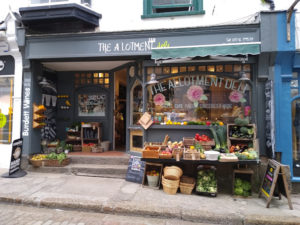
Green Grocer, St Ives

EnglandFamilyHolidaysTravel

October 22, 2019

Entering Kernow

Wendy, Sue and I set out for Cornwall early afternoon and I got a feel for the pattern of the days. Everything is a reason to stop for a cup of tea and probably a slice of cake. (The English have a real gift of the cake.) I think our first stop was to celebrate having gotten away at all and it turned out to be for lunch at The Monks Yard just off the A303 at Horton Cross. I know this because I was obsessed with toggling from the paper map to Google maps.

I ordered for all of us at the counter where I noticed a gluten-free Victorian cream cake, which I did not have room for but ate a slice anyway. Another pattern begun. The counter person said “And would the ladies like like sugar in their tea?” I looked across the room to where Sue and Wendy sat at a corner table. I wanted to say, “Oh, do you mean them?” But I didn’t.

At the gift shop across the way I found Pip & Ettie waxed wraps, something on my list for Christmas gifts. It turns out that Sue and Wendy know Pip and Ettie (they are a friend’s two daughters) so I bought a lot.

We skirted Exeter and went across the top of Dartmoor on the A30, slipping into Cornwall around Launceston without the grand entrance over the Calstock Viaduct down by Plymouth. I looked up from the map just in time to see the sign saying we were entering Kernow. It was one of those longed–for moments like when I would watch for the first sign for Walla Walla when I went back to school. I was back in Cornwall. Everything began to look Cornish: the narrow roads, the high hedgerows, the occasional glimpse of the green quilt of the pasture enclosures, the dots of white sheep.

Wendy did all the driving. Sue doesn’t drive and I won’t drive in the U.K. It was her call as to what road to take and when to stop. She went straight through to the coast. We stopped at Pendeen for what we thought we might need until we did a proper shop the next day in St Ives.

Pendeen is tiny but it had the closest shop to where we were staying. It’s a “Cost Cutter” shop. The shop in Butleigh is a “Londis” and the one up in Port Ellen was a “Spar.” These are franchises run and supplied a bit differently than the Co-ops. That about ends my interest in them; it’s just that they are so much of the landscape now. The privately run Green Grocers are dying out although there was one in St Just and another in St Ives. I remember when there were Green Grocers in London neighborhoods. Dark, funny little places with fruit and veg that looked like real food out of the garden, not airbrushed and waxed for the supermarkets.

We needed three kinds of milk for our tea. Sue drinks lactose-free, Wendy drinks skim and I wanted whole milk. Last time I was here I told them I wasn’t drinking that thin white water in my tea.

I would have really liked double cream, which is like our whipping cream but Wendy had shamed me out of that on my first night: we had had raspberries and cream at dinner. The cream pitcher was all glommy with leftover cream. I scooped a spoonful into my tea.

“Cream in tea?” Wendy said. “That’s not very British.”

Nothing could stop me in my tracks quite like telling me that. It’s too bad she couldn’t have said that eating sugary food and sitting around all day wasn’t very British.

A mile down the road from Pendeen was our destination, Morvah, and a holiday cottage called “Trebeigh,” one of a series of old stone cottages and a farm, all owned by our hosts, Sue and Alec. We met Sue (hereafter known as Morvah Sue) before we were scarcely out of our car. She bustled over from her home across the yard.

“There you are. So glad to see you. Long journey? Sue, Wendy, Elena, oh you’re Cornish are you? With an American accent. Now the key is in the lock. You try it. Here’s a second set. Just a few rules of the house. Here’s the lounge. It’s a bit musty from the chimney. Just open the door and a window to clear it out. The wifi information is there. DON’T TOUCH the modem or we’ll all lose our internet service. Here’s the kitchen. Funny story, we bought this tablecloth in guess where?”

We looked in silence at the tablecloth, which had drawings of cats on it.

“’Mouzul,’of course. She looked at me, “‘Mouse-hole’ to you. Well, I’ll love you and leave you. Oh. Mysterious story. The two ladies who first lived here were Maude and Laurie Annie Noye. My sons were born on the same days that they died.” She nodded solemnly. “Well, I’ll love you and leave you.”

When she loved and left us for the last time, we looked at each other and blinked. Finally Sue said, “I didn’t think her stories were either funny or mysterious.”

I said, “I’m offended that she didn’t think I know Mousehole is pronounced ‘Mouzul.’”

But Morvah Sue was a good sort and so was her husband Alec who we were to see often in the ensuing week.

Across the road from Trebeigh is the Morvah Parish Church and churchyard. I chose the room where I could see the church and the old headstones and monitor Alec’s enormous cow, Doubtful and her chunky little calf, Neptune in the pasture beyond. The official name of the church is St Bridget of Sweden after a 14th century mystic whose followers were the first to inhabit St Michael’s Mount.

St Bridget’s Church, Morvah

We got ourselves reasonably settled, ate something or other, had our cups of tea with three milks and settled in to watch a DVD. Sue couldn’t get the DVD player to work. While she and Wendy fussed over it, I went out in the black night using the flashlight on my phone to find Alec or Morvah Sue. Alec was chopping something in the kitchen and said he’d be over “dreckly.”

Alec is a cheerful Scottish man from Ayrshire who has lived in Cornwall since 1967. He and Sue were married in the parish church at Zennor because the Morvah church was too small. Over the years they acquired most of the cottages until now they pretty much own the village. He came in and looked at the remotes. “Which one is it?” he asked. He picked up one and then other and pushed buttons. “Well it’s not working.” Push, squint, push. “That’s not right.”
Finally he worked out that we needed a new DVD player and he went off to get one. We speculated that he had a whole room full of things like DVD players and teapots for all the cottages. When we finally got the DVD player sorted, I had a piece of my own private Christmas cake.

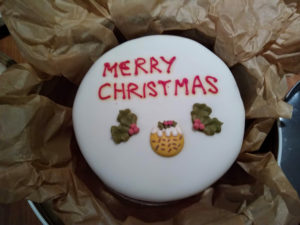
Last Christmas Wendy’s sister Joy had made me a gluten-free Christmas cake that was so heavy the postage to send it was prohibitive. A British Christmas cake is a fruitcake frosted first with marzipan and then with royal icing. The royal icing had hardened and kept the cake preserved. Neither Sue nor Wendy were interested in sharing it with me so I got the whole thing to myself and had my first tasty piece that evening. And so ended the first day of the Cornish holiday.
My Christmas Cake


EnglandFamilyScotlandTravel

October 17, 2019

Revisiting Butleigh

Tags:

Castle Cary is a market town in southern Somerset but I only know it as the train stop for Butleigh where my cousins live in a stone house with five cats and a rabbit hutch used now for pegging up the washing. Sue met me at Castle Cary; David, her neighbor had driven her. I could hardly believe I was there but then again it felt like I had never left: 95/96 Chapel Lane, the rabbit hutch, the cats (Seamus, Misty, Tabsy, Lizzy and Izzy), the pots of flowers and Wendy looking so familiar, kind and calm.
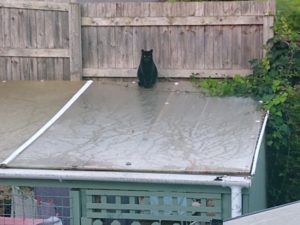
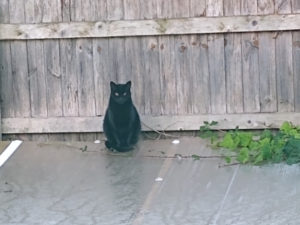
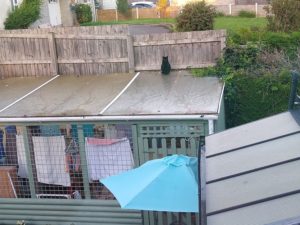
Lizzy on the rabbit hutch roof, one

Two

Three

And now Pam. When I was here three years ago, Pam (Wendy’s mum) had had a stroke and was in a care home in Glastonbury. In the intervening years, Pam’s house in Burnam-On-Sea was sold and she is now in the little mother-in-law apartment in the house on Chapel Lane. Her hair looked smart though Pam was somewhat crumpled into a chair.  She’s quite voluble except she doesn’t say any actual words. Wendy can usually figure out what she’s trying to say. A lot of the garble sounds like “cuppa tea” and a lot of it probably is. She knew me and still had associations with having stayed with me (twice) in Seattle.

After a welcome dinner of salmon I had the first of 5478 cups of tea and embarked on a three day sugar spree, which came to an abrupt halt when I realized my joints would not support such a diet, but that’s a story for later.

Wendy played a video that became the basis of a week’s worth of laughs. I had to watch it at least once a day and I finally transcribed it. A Scottish comic named Janey Godley who does voice-overs of political figures just about shut down YouTube with this one of Theresa May giving her last speech to Parliament. You can read the transcription below the link.

“Well, and so I face the final curtain. I got my special Margaret Thatcher jacket on for the job today and the good news is I won’t have to look at that bastard Corbyn and his gloomy face across the table one more time.  My menopause has been up to fucking high dose since I started. Between the debacle in the Brexit, the mess that Boris Johnson’s goin’ to take this country in, good luck the fuckin’ lot of you, that’s goin’ to be a pile of shite and I’ll tell you somethin’ for nothin’: I am goin’ to get ‘n a caravan, pud on me sandals and I’m goin’ pud me toes in the water, so aye. Fuck the lot of you.

(She sits down. Applause. She gets up and starts to leave.)

“Aye, whatever. Move. I’m outa here. Move. Move yer arseholes. Move. In my way. Move ya dick. Move. Don’t touch me. I fuckin’ told you not to touch me. Open that door, Frank! Frank, open the door. I’m outa here. Bunch of fuckin’ arseholes.”

All week, one or the other of us came out with the periodic “Aye, whatever” or “Frank, open that door.”  Simply saying “move” would set us snickering.

I had only one full day in Butleigh and I used it in part to visit all the parts I remembered from my last visit: the drain, the wooded path off the drain where I could sometimes see sheep grazing, St Leonard’s church, the High St at the top of which is now a cafe. I took videos and narrated as openly as I dared.

Over and again I passed a man in the drain who was either painting a green fence or sanding away the drips from his painting.

“Are you smoothing it off?” I asked

“No, I’m taking off the drips because well, it’s dripping. Is that a North American accent I hear?”

I stopped and we chatted about his daughters who both live in the states.

I popped in to see Marian, David’s wife from next door. Her mother died since I was last there and like me when my mother died, her creative life began to flourish and her world had opened up. She gave me a handcrafted wooden heart and one of her aromatherapy oil blends. I toured David’s garden of dahlias, tomatoes and huge pumpkins.

Sue had to work –she runs the village post office-shop–and I was down to the shop several times to watch people come in and out. They all thought I was ahead of them in line and I kept saying, “No go ahead, I’m loitering,” and Sue would call out, “She’s with me.”

In the afternoon Pam, Wendy and I looked at old photographs and pieced together what we knew of the family connections. I had a great Aunt Ann who corresponded with the Cornish side of the family;  I found the addresses in her address book after she died and wrote to a Miss Hazel White. Hazel was in her 70s at the time and I was in my 20s. A few years later I traveled to Harrowbarrow, Cornwall to meet this elder. Hazel showed me the cottage of my great grandfather, James Knott who emigrated as a young man to Walla Walla, Washington. She made me a family tree showing James Knott as the brother of Elizabeth who married William White. The Whites and the Knotts became family in the late 1800s.

I visited Hazel several times before she died. By then I had met her niece, Pam, the granddaughter of Elizabeth White (Are you getting all this?) and Pam’s husband, Mervyn. They came twice to Seattle and stayed with me and I made several more trips to Cornwall to visit them. Mervyn died about five years ago and Pam had the stroke. By then I had met the next generation, Pam’s daughter, Wendy and her longtime, friend, Sue. Wendy and Sue are closer in age to me than the other generations and they more like family to me than almost anyone left on earth even though the genealogical connection is distant.

The next morning I walked to the shop with Sue. I could seriously spend a week in Butleigh just going to the shop. There’s always something interesting happening. On this morning a woman was sitting in a motorized cart on the sidewalk.

“Has anyone seen you yet, Caroline?” Sue asked

She leaned into her bunched up shopping bag. “Not yet.”

“Give me your list. I’ll do it.”

Caroline handed over a list, a shopping bag and her purse. Sue collected her items and Julie at the register totted it up and took the money out of the purse. I took the bag and the purse out to Caroline and got all the credit.

I found several more reasons to go back to the shop: stamps, then cash. Only my card wouldn’t work for cash so the postmaster did a kind of voodoo whereby I could get 70 GBP.

“I expect you don’t want me to tell anyone about this,” I said.

“That’s right. No one.”

“Not even Sue.”

“No.”

“Or write about it in my journal?”

“Not that either.”

“Will do.”

Back home I sorted a box of Sue’s cards–she’s a talented photographer--and bought a stack. Then I read aloud all the synopsis on the backs of Pam’s E.V. Thompson novels while holding the book covers for her to look at. When I’d had enough of Cornish bodice rippers, we watched “Dad’s Army.” Finally Wendy’s sister, Joy arrived to stay with Pam and the three of us left for Cornwall.

ScotlandTravel

October 14, 2019

Adventures on Boats and Trains

My last night on Islay brought a doozy of a storm. I wouldn’t have minded being stranded another day but the next morning, ferries were running. However they were only running from Port Askaig, which is more sheltered than Port Ellen. We were taxied up the high road and rushed unceremoniously onto the car deck of the ferry just before it moved out into the Sound of Islay. By then it was a beautiful warm day with clouds and blue sky but the wind was still strong.

I got a cappuchino on the ferry.

“Did you want chocolate with that?”

I couldn’t think what he was asking. Did he mean chocolate covered espresso beans like in Seattle or did he mean a Cadbury flake?

“Chocolate, “I repeated. “Where would I put it?” (It was chocolate; why did I care where he put it?)

“Where do you think?” The Scottish, I notice, can be blunt like that.

I sized him up. “I don’t know,” I said. “Maybe a drip into my veins?”

He laughed. “Maybe in five years” and sprinkled chocolate powder on the coffee.

I was truly sad to leave Islay. I loved the wild and stark look, the feel of an island, the scent of the sea, the friendliness of strangers and the warmth of the people I had met, especially the wild and magical Rachel; and Margaret and Harold at The Grange.

Glasgow replaced the wind in my face with a batting around of people but I had come back to a little corner of the city that felt familiar. When I arrived in Glasgow a week earlier after nine hours on the plane and five on the train, I felt dazed. At Glasgow Central, a policeman had set me in the right direction to my hotel, which was just around the corner on Argyle St, a few blocks from the Clyde. I walked down to the Clyde after getting settled and crossed the river on a foot bridge, the Tradeston Bridge. That was the extent of my adventures in that first 24 hours of travel.

In Glasgow Central

Breakfast the first morning was at “sex-thairty” and it was a country house spread: a row of covered hot dishes and islands for fruit, cereal and bread. A compote of berries was called Forest Fruits, which tickled my imagination. Were they picked by piskies?

As I ate I watched a woman with whom I had ridden the elevator and who was ahead of me in the breakfast room: a gratuitously rude person who sighed with Weltschmerz when the hostess asked her for her room number. She signaled how put upon she was by tossing her head and saying, “I don’t know. Three something.” To heap insult upon her, the hostess asked for her name and finally located her on the list of guests who had paid for breakfast. The hostess and I had a gossip about her after she swanned into the breakfast room.

Arriving in back in Glasgow after the week on Islay I taxied from Buchanan Street Station to the same hotel around the corner from Glasgow Central on Argyle St. To stretch my legs, I walked the opposite direction from the River Clyde. I found a little loop called the Argyle Arcade, which was shop after shop of jewelry, each window glittering like a million stars. The shopkeepers were all in severe black and looked like they might possibly be armed.

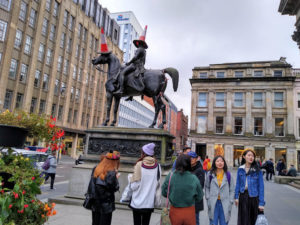
I carried on past the public library where someone had put traffic cones on a statue of Wellington and his horse. A group of Japanese girls were giggling and taking pictures. At George Square, I turned back and turned in early for the night.

Wellington with Traffic Cones

I pulled my suitcase over to Glasgow Central early the next morning, the better to partake of anything on offer in the first class lounge. The first class Brit-rail pass that one can get in the states is ridiculously inexpensive and is worth all the perks, one being all the free food, drink and comfort in the lounges. I hit the jackpot in Glasgow: a huge bowl of little gluten free Bakewell tarts, which were yummy in the extreme. Every time I went by them (for a coffee, fruit, water, a paper, the toilets) I stuffed a few more into my pockets. I savored them for the rest of the trip and still had five when I landed in Seattle two weeks later.

In the train in first class, one has already paid for everything that is offered. The tea trolley rolls down the aisle regularly and on long trips like Glasgow to London there’s a meal served. I luxuriated in the comfort and the space and peace at least until Lancaster when a ghastly couple with whacking great colds sat down across the aisle from me and hacked all the way to London. I thought, So help me, if I catch your cold, I will hunt you down like dogs.

Using the loo on the train is always interesting. The first class loo is as big as a walk-in closet whereas in other cars there’s hardly room to sit down. It’s also as complicated as a Smart TV with buttons here and vocal instructions there. I lurched into one with ear-buds in, listening to a playlist I had collected. I didn’t quite get the door shut properly. Over the music, a strident American accent shrilled “Door did not shut, door did not shut!!!” I fumbled with a button. “Door did not lock, door did not lock!!!!” I pushed the button harder. “Door is locked, door is locked!!!” The drums of Verdi’s “Dies Irae” had started and I found myself staring at the toilet, which was purple. A garish purple. The strident voice, the “Dies Irae,” the train rocking, a purple toilet, just a bit surreal.

In London, I bussed from Euston to Paddington and to my home away from home, the Paddington lounge, familiar to me because the west country trains leave from Paddington station and the west country is where I always go sooner or later because my cousins are there. I helped myself to a handful of GF Flapjacks baked by Mr. T.G. Pullins bakery in Yatton, Somerset; I came home to Seattle with several of them still in my possession. I also pinched biscuits for my cousins, Wendy and Sue, who I would see in a few hours. The three of us would embark on a new adventure.


ScotlandTravel

October 11, 2019

At Large on Islay

It rained hard my third night on Islay. I looked out the window early morning and thought it was yet another reason I would miss Rachel. I had to get around on my own for the next two days. But by the time I came down to the breakfast room at The Grange, it was clearing up outside.

Maggie made me the same breakfast every morning: orange juice, 1 egg, 1 rasher of bacon, GF toast and tea. (In case you aren’t familiar with bacon in the U.K., it’s more like what we would call ham and it’s very tasty.) After these breakfasts, I wasn’t usually hungry again until mid-afternoon. Harold chatted with the guests and we all heard about everyone’s adventures of the previous day. The Barrow-in-Furness brothers had left and in had come various young American couples and a jovial fellow from Burnley who was there to catch and release sharks for the fun of it.

Everyone had tales to tell about walking the Three Distilleries Pathway that begins just around the corner from The Grange. It’s a distance of three miles. The first half mile gets you to Laphroiag; a mile or so later, Lagavulin and at the very end, Ardbeg. Today was my day.

Harold gave me a lift to Laphroiag (pronounced la-froig) to get me started. A long time ago, Laphroiag distillery ran a hugely successful marketing campaign whereby you could own a square inch of the land. I don’t remember actually paying any money, I think there was just some official looking form to submit and I was sent a certificate saying I owned a piece of Laphroiag. I was at that time just starting to enjoy the scotches I referred to as “the smoky, peaty ones,” of which Laphroiag is one of the best.

Entrance to Laphroaig Distillery

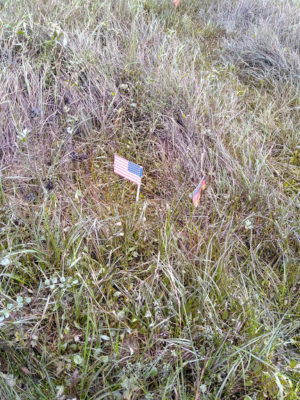
Harold told me to collect my rent when I visited the distillery. I thought it was just one of his funnies but in fact if you tell them in the gift shop that you want to collect your rent, they give you a mini bottle stamped “rent paid!” They actually have the coordinates of the square inches catalogued and you can put a wee flag from your country on your square inch. I didn’t have any documentation with me but they said to put it anywhere I chose. Clearly this was a marketing scheme that became happily unmanageable.

Catalogs of Friends of Laphroaig


My plot, Laphroaig


The distillery is an impressive estate and squeaky clean as was Lagavulin up the road. I had a wee dram of lovely 19 year old Feis Ila in the comfort of the Lagavulin bar and mused about drinking whisky at 10:00 in the morning. Feis Ila is a scotch from the Caol Ila distillery, which I learned was owned by the same people as own Lagavulin.

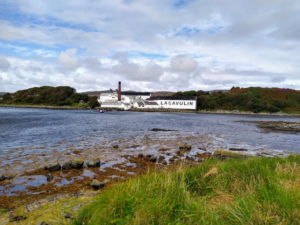
Behind Lagavulin distillery on a little peninsula are the ruins of Dunyvaig Castle. I walked out to the ruin to get the iconic view of Lagavulin distillery.

Iconic Lagavulin


The wind was blowing and the day was damp but it wasn’t cold. There would no doubt be more rain before too long but while on the footpath, I stayed dry. I enjoyed the sight and smell of the sea, the green grass, the enormous cows and the wonder that I had come such a long way to this island that I have wanted to see for so long.

Ardbeg was the end of the Three Distilleries Path. I had lunch, having been told I could get a “lovely lunch” in their café. I had thought I would curl up after that and have a wee dram and write but there wasn’t any place to do so. I said hello to one of the servers who lives down the road from The Grange and who has a cat named Bob. Then I walked out to the bus stop to wait for the bus that would take me back to Port Ellen.

Waiting for the bus at Ardbeg

It began to pour just after I got on the bus. This was to be my experience all the while I was in Scotland. I was generally aware that it was raining or had rained but I never got caught in it.

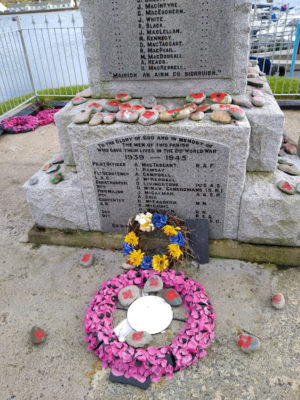
I explored Port Ellen. A post office shop called The Blue Letterbox, the Spar grocery shop (Spar is a chain of convenience shops), the Co-op, which seems to be everyone’s preferred place to buy groceries and down at the end of the high street, an old family-owned everything shop called Macaulay and Torrie. I walked down to the port and looked at the war memorial festooned with a wreath, poppy images and poppy-painted rocks.

War Monument, Port Ellen

Finally I ended up at the Islay Hotel for a cup of tea and a piece of cake.

The next morning I took the bus into Bowmore, the largest village on the island. I visited the round church at the top of Main Street, then called into the tourist center to get some help with my plan for the day. I wanted to explore Bowmore, go to the Islay Woolen Mills and have a leisurely lunch somewhere. Here was the plan we worked out:

Immediately: explore Bowmore for an hour and a half

12:39: Take the bus to Bridgend and have lunch in the Bridgend Hotel (They do a “lovely lunch.”)

2:50: Take the bus to the Woolen Mills, which are not a stop but the drivers (most of them anyway) will let you down there if you ask.

3:50: Stand on the edge of the road and flag down a bus to take you back to Bowmore.

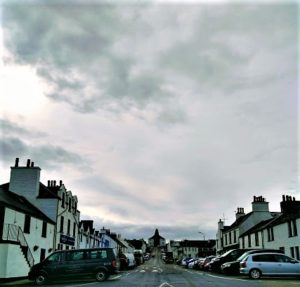
Main Street, Bowmore

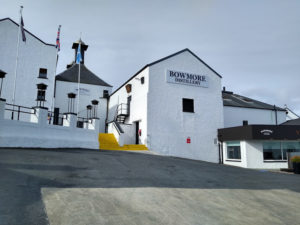
At the Bowmore distillery I sweet-talked an 18 year old dram out of the bartender instead of the 10 year old they were offering as samples because I told him I could get that in Seattle. I had a good natter with Ron at the Celtic House, a book shop to die in. I wanted to buy every book I saw. Authors I’d never heard of, books about Islay and Jura, books Rachel had recommended.

Then I popped up to the tea room above the bookshop where I put in ear buds and found Bach’s Mass in B Minor on my phone. I was upping the volume the better to hear it when in my line of vision someone was waving at me and pointing to her ears. I took out my ear buds and she told me she didn’t think I was plugged into my phone. I could hear Bach all over the shop! I pushed the plug in firmly and the baritone voice stopped.  Next to me two octogenarians were doing quite well whizzing around on their phones.

When I left I leaned into the woman who had signaled me and said “Technology is going to be the death of me.”

She laughed, “No worries!”

I caught an earlier bus to Bridgend with the same driver who had brought me to Bowmore earlier. When I finished my lovely lunch at the Bridgend Hotel I decided I would walk up the road to the Islay Estate. The road is two lanes and no shoulders but I was told that after a bit I would see a footpath. I never saw the footpath so I walked a mile up the road to the estate.

The Islay Estate was a kind of Downton Abbey affair back in the day of the Campbell Laird who owned it. In the yard which use to house the smiths and joiners and other professions necessary to keeping the lord and lady and their entitled children ensconced in their privilege there are now crafts-people and galleries. Several places were closed and the rest looked a little tired. I walked first in the kitchen garden, which was being put to bed for the winter. It must have been magnificent in its day. Then I visited with Elizabeth Sykes, a batik artist who is in the process of retiring and who Rachel had told me about. She made me the best cup of coffee I had had since I left Seattle.

“The Americans and the Germans all seem to like my coffee,” she said.

I went back to the main road, which I persist in calling the highway and confusing everyone because technically the main road is the low road. In the car park a big burly man with a red beard asked me if I was lost. I said I was hoping to flag down a bus to take me to the woolen mills.

“Hop in,” he said. “I’ll take you.”

His name was Rob. He was kind, drove very fast and talked non-stop. He left me at the top of the drive to the woolen mills and I followed the sound of rushing water until I came around a corner and entered the mill shop. An elderly man presiding at the counter asked me what I would like. I said I didn’t know, I had just come in the door.

“Well, look about!”

I looked about the gorgeous shop that smelled of wool and damp. In the back the looms were crashing away and I took a quick video while the weaver wasn’t looking, getting closer than I was technically allowed.

I noticed a portrait of a young man who could be no one other than the elderly man at the front counter, the owner, Gordon Covell. Another name I knew from Rachel’s tutelage. I introduced myself and said Rachel had told me about him.

I had to lean in to hear his thin voice say, “It wasn’t me. I wasn’t there.”

I burst out laughing.

At this point in my adventures, I was a mile from the nearest bus stop and it looked like rain. I went to the top of the road and hoped the bus I knew was coming would stop when I waved. It wasn’t the Islay bus I flagged down; it was a school bus. Evidently they will pick up anyone by the side of the road, too, so I rode into Bowmore on a school bus. I waited ten minutes in Bowmore for the bus to Port Ellen and once I was seated inside it started to rain.

At the Co-op in Port Ellen, I picked up some yogurt for the evening and found Margaret, my hostess, in the shop.

“Pop into the car—it’s the white one just across—and I’ll give you a ride up the hill.”

I popped in. I sat there uncomprehending for a bit thinking incredulously, “What is the steering wheel doing over here?”

I popped out and went around to the rider’s side. Margaret laughed when she got in the car; she had seen me. They could run a contest of the sighting of tourists getting into the wrong side of the car.

The wind was whipping up when I went to bed and I wondered if the water would be so wild in the morning that the ferry wouldn’t run. Stay tuned.


ScotlandTravel

October 9, 2019

Of Scotch, Tablet and Word Games

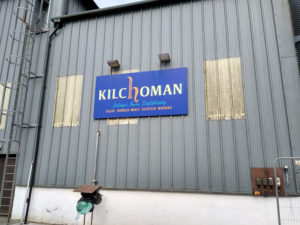
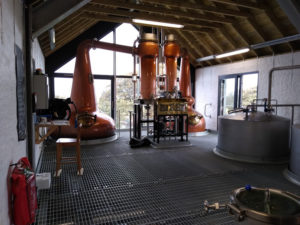
My second morning on Islay Rachel drove us to the west part of the island to Kilchoman distillery. This was to be my only official distillery tour although I called in at the gift shops of nearly all of them. I’m glad Kilchoman was to be the distillery I toured because I like their Scotch and I don’t see much of it in Seattle. Also Kilchoman is self-sustaining. Everything is created, used and recycled. They grow the barley, harvest and thresh it and feed the chaff to the cattle. They dry the barley, smoke it and make the mash. They extract the liquid and fertilize the fields with the mash.

Kilchoman

We began the tour with  jiggers hanging around our necks on lanyards so we could sample every step of the process from the early beery taste to the new make, which was just astonishing. I can still feel its intensity and my surprise at its finish. It was like absinthe: liquorice-flavored and very strong.

I was impressed by how immaculate the place was. All the distilleries, in fact, gleamed like expensive cruise ships.  Important to keep in mind when the water in the loo ran brown from all the peat in the earth.

While I was on my tour Rachel ate a bacon roll and read Advancing the Retreat, which I had given her. I brought one copy with me knowing I would meet at least one person I would want to give it to. Rachel has an MA in Scottish literature and a degree in pure architecture and in landscape architecture. Houses she designed dot the island. She has studied engineering, religion, and women’s studies. We talked books, literature, feminism and spirituality. We were our own little cross-discipline seminar as we bounced all over the island of Islay.

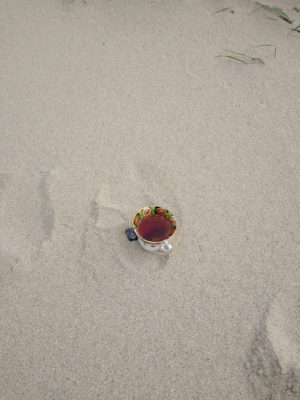
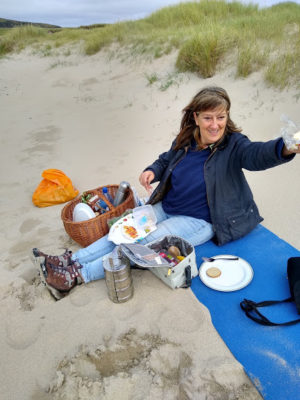
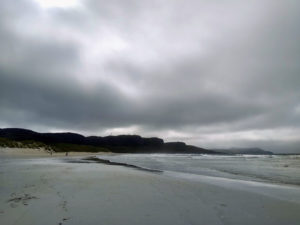
For a picnic on Machir Bay Rachel built a peat bonfire and gave me a tea in a bone china cup.  I’m still annoyed with myself that I didn’t go barefoot in the water. It was cool and overcast but that has never stopped me. Yet one more reason to return to Islay is to wade in Machir Bay.

Machir Bay


Islay is shaped like a crab claw. As we drove down the inside of the west pincer along Loch Indaal, we got glimpses of the other pincer, better known as the Mull of Oa, pronounced Oh. At the very end of the Oa is an American war monument, which thankfully we did not take the time to visit. I heard an awful lot about the monument when people learned I was American.

“Oh you’ll want to see the American monument on Oa, then.”

“Why would I come all this way to go look at an American phallic symbol?”

But nevertheless there it was, coming in and out of our line of vision as we drove. Rachel and I made a comment or two about it.

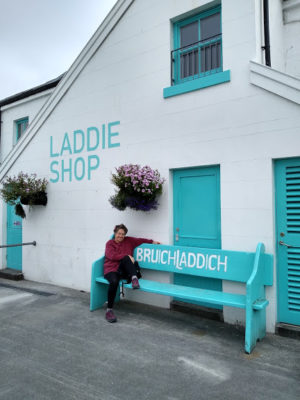
We called in at Bruchladdich distillery, sampled whatever wee dram was free (although I think Rachel finagled me something off the menu) and visited the village shop.

At the Laddie Shop, Bruchladdich

in the village shop at Bruchladdich

Rachel was on a hunt for some particular chocolate truffles to pair with whisky but we apparently were too late. It seems they go fast. The last place we looked was the kitchen of a little craft cottage where the truffles originate: An Gleann Tablet.

A glean is a glen. “Tablet” is a little harder to explain as Rachel found when she tried to explain it to me. The tablet at An Gleann  looked like penuche but that wasn’t a reference point for Rachel. I said penuche was a kind of fudge, it just wasn’t chocolate.

“Tablet isn’t fudge. It’s Tablet. It doesn’t even look like fudge.”

I gave her that. It didn’t look like fudge. It looked like toffee.

“The texture is grainy,” she said. “And it’s not chocolate. Fudge is chocolate and creamy.”

Now this was confusing. I bought what was labelled “Scottish fudge” at the Coop down the hill from The Grange. It was grainy and tasted of brown sugar but it was still called fudge. The stuff at An Gleann turned out to be world’s better than the stuff from the Coop but it was of the same species.

“It’s like brown sugar fudge,” I said at which comment I thought Rachel might drive away and leave me.

It was round about here that I pinpointed the feeling that though I was about 12 years her senior, Rachel felt like a big sister. Something about the easy way she was with me. Maybe it was her openness and her frankness. Maybe it was the way her accent worked on me. I was always a little behind her mentally because I was doing so much translating in my head. I had some difficulty understanding not just Rachel but much of Scottish speech yet I found it endearing. There’s music and laughter in the Scottish voice.

We were talking about people’s worlds being their cell phones and I said I wondered what would be the outcome down the road.

“I don’t wonder,” she said. “We’ll all be rowboats.”

Rowboats? I thought. Was this some kind of word play or metaphor? I played along. “Who would row the rowboats?”

She gave me another of those looks like she suddenly realized I was an escapee from a mental institution.

“Rowboats!” she insisted. “Rowboats, rowboats!” She tapped her head. “Think of the context, Elena! Rowboats.”

“Oh.” I suddenly got it. “Robots.”

“Yes, Rowboats. Think of the context of what I am saying.”

“Rachel, I’m getting 80% of it!”

It was gloomy that Sunday, not many people about, and of course many businesses were closed. A light rain came and went. I had hoped to see seals on the rocks at Portnahaven but there was only one who seemed interested. I sang to him and he bobbed up and down in the water, watching us.

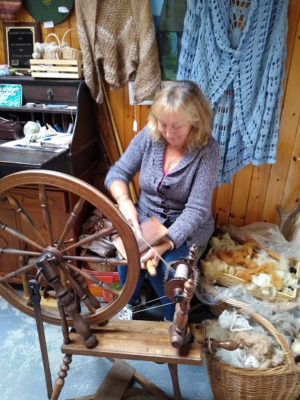
After Portnahaven, we started up the west side of the island to Tormisdale Croft where Anne sat spinning and there was no internet access. The sound of the wheel in the quiet of the shop was mesmerizing. No wonder Anne was so calm and bright.

Ann carding at Tormisdale Croft

Anne had just acquired two piglets from a neighbor and she and Rachel had a natter about that. Everyone seems to know everyone on the island and more importantly, everyone’s business. Rachel, especially is a walking network of people and information about Islay, Jura and no doubt Colonsay where she was born and Oronsay, two little islands in this group in the southern Hebrides.

On up the road was Kilchiaran Chapel where we sat in the nave of the ruin and paired tablet with whiskey because we hadn’t found the truffles. I liked the tablet with Laphroaig although the combination of sugar and alcohol is not smart for me.

Kilchiraran, Islay


I learned that putting a drop of water in the Scotch to “open it up” is an old-fashioned idea that the Americans like because it brings out the sweet but leaves behind some of the complexity. Rachel suggested I close my eyes, put my nose in the glass and draw out the scent before letting a drop in my mouth. Then savor it and pay attention to its subtleties.

Another language puzzle: Rachel said that when I saw the prefix “kil” I should think of monks’ sales.

Sales, I thought. Like medicinal wine sales? Or sails. Was this another boat thing?

“Monks’ sales, Elena. Think of where monks live.”

“Oh, cells,” I exclaimed.

“Exactly. Sales.”

Kil, cella, the altar of a temple. I truly will never forget the mean of the prefix “kil.”

The next word game came up soon enough. Rachel asked me if I had any pates.

“Spell it,” I said.

“P-e-t-s.”

“Oh yes, I have a cat.”

The Hide

The day ended with a visit to the Hide at Loch Gruinart. I had never been in a hide before. It’s peculiarly suited to patient people, which I can be on occasion. But by then I was tired. My two days with Rachel had come to a close. I would miss her, her spirit, her generosity, her humor and intelligence.

But I’d be glad for some time on my own, which I had the next day.