Shakespeare

July 22, 2012

The Merchant of Venice

Tags: , , ,

Before I read this play I knew only a few things about it: there’s a character named Shylock, the play is said to be anti-Semitic and Judi Dench “loathes it.”  As I read it and thought about it, I wanted to tweak it, to change this emphasis or those words.  I wanted to make it acceptable to modern audiences.  In the end I decided it stands best as it is.

There are two parallel plot lines.  The play begins with Antonio offering to help his friend Bassanio secure a loan.  Antonio has a bunch of ships that he expects to come into Venice within the month but he currently has no cash.  He offers his physical self as collateral to Shylock, a moneylender.  Shylock agrees to loan him the money interest free but his terms are a pound of Antonio’s flesh should he be unable to pay the debt.

The second plot has to do with Portia, a rich woman living not far from Venice in Belmont, a kind of Club Med community.  Portia’s father’s will stipulates that she may marry the man who chooses correctly among three boxes: The gold box grants what many men desire, the silver box grants what one deserves, the lead box claims to requires him to give all he has.  The lead box is the correct choice. Portia is on pins and needles watching a string of suitors open the gold and silver boxes.  She knows she wants to marry Bassanio.

Bassanio also wants to marry Portia but he thinks he needs Antonio’s money to make himself attractive to Portia.  He intends to pay Antonio back with his wife’s money once he has married. Portia offers Bassanio enough hints that he chooses the lead box and so they marry.

Meantime the debt has come due, Antonio’s ships have not returned and Shylock is demanding his pound of flesh.  The deal goes to court.  Portia dresses up as a man and passes herself off as a doctor of letters in order to maneuver the outcome in Antonio’s favor.

That’s the laundered version.  Here are some of the stains:

Shylock is presented as a loathsome individual, hated and derided because he is Jewish.  In the end he loses almost everything, is forced to convert to Christianity and forced to say “I am content.”

Portia is being controlled by her father from his grave.  His will has made no provisions for what Portia herself may actually desire.  Even though Portia has initiative and energy within women’s marginalized position in society, she doesn’t do anything with it beyond her own immediate self-interest.   Though she has a famous speech about mercy, she doesn’t have any for Shylock.

The other characters are boring, rich and shallow.  None of them appeal to me, none of them are likeable. Everyone pretends to be something he or she is not with varying degrees of consciousness about how they all use each other.  They all extract their own pounds of flesh from each other in different ways.

I actually dislike Shylock the least, not because he is especially likeable but because he is so badly treated that I feel righteous pity which is in its own way demeaning.   I expect that for Elizabethan audiences it was meant to be the other way around.  Or maybe the play was meant to be the disturbing thing that it is but the disturbance is felt differently depending on who sees it.  It’s like those boxes.  The choice of box reveals something about the chooser.

It’s exciting to have a shiveringly bad villain in a play.  It’s fine if that villain also happens to be Jewish, or gay or female or black or Asian or Muslim.  It’s when a person is considered a villain purely because of his race or religion or gender that stereo-types are born and bigotry flourishes.   But Shakespeare has not presented (or created) a stereo-type unless one chooses to see it that way, which is why I think the idea of the boxes is so interesting.  He exposes fault lines if one wants to open those boxes.  When Shylock is defending his legal right to take his pound of flesh he says:

*You have among you many a purchased slave,

Which like your asses and your dogs and

Mules you use in abject and in slavish parts,

Because you bought them.  Shall I say to you,

‘Let them be free!’. . . you will answer,

‘The slaves are ours.’ So I do answer you.

The pound of flesh which I demand of him

Is dearly bought, is mine, and I will have it.  (IV, i)


This is a shrewd point but there’s no evidence that any character in the play takes it.

The final point of Shylock’s other powerful speech is often omitted when it’s quoted but I left it in because I think it makes the point almost better than the “prick us, do we not bleed” bit that Shylock is a human being, a person.

*He hath disgraced me and hind’red me half a million, laughed at my losses. Mocked at my gains, scorned my nation, thwarted my bargains, cooled my friends, heated mine enemies–and what is his reason?  I am a Jew.  Hath not a Jew eyes?  Hath not a Jew hands, organs, dimensions, senses, affections, passions?—fed with the same food, hurt with the same weapons, subject to the same diseases, healed by the same means, warmed and cooled by the same winter and summer as a Christian is?  If you prick us, do we not bleed?  If you tickle us, do we not laugh?  If you poison us, do we not die?  And if you wrong us, shall we not revenge?  (III, i)

Here are more great lines:


*The devil can cite scripture for his purpose. (I, iii)


*It is a wise father that knows his own child. (II, ii)


*. . .in the end, truth will out (II, ii)


*All that glisters is not gold. (II, vii)


*The quality of mercy is not strained.

It droppeth as the gentle rain from heaven

Upon the place beneath.  It is twice blest;

It blesseth him that gives and him that takes.  (IV, ii)


Shakespeare

July 19, 2012

Romeo and Juliet

Tags: , , , , ,

I hadn’t read Romeo and Juliet since college and my impression was that it was two hours of that damn balcony scene and half an hour of fencing.  So I am glad I read it again because after a few false starts and with the help of the BBC, I enjoyed it.  Like the rest of the plays I’ve read, it’s gotten under my skin.

All the commentaries I’ve looked at agree on two things: “Wherefore art thou Romeo?” does not mean “Where are you Romeo?”  It means “Why is your name Romeo?”  Pass it on because it would be nice if the pedants could get over it.  The other thing everyone mentions is that the play is bursting with romantic, bawdy and sexual innuendo.

I was plugging away at the text when I got to Mercutio’s mention of Queen Mab and a little tinkerbell went off.  Queen Mab.  The Queen Mab speech. (http://www.monologuearchive.com/s/shakespeare_067.html) This carried me back to my junior high school years when the Franco Zefferelli movie of Romeo and Juliet came out.  My friends and I saw the movie.  We bought the soundtrack.  We read every Tiger Beat and 16 Magazine that covered its stars.  We bought the sheet music to the theme song.  My friend Mary played it on her flute and I played it on the piano.  We sang the sappy words with all the earnestness and solemnity of 14-year-old girls who had only a vague notion of what a virgin was.  (I say had because I’m not sure the species exists any longer.)

We loved that movie and it encouraged us to read the play.  Mary started calling everyone “ladybird.”  She was prone to spout things like “Beautiful tyrant! Fiend angelical!” (III, ii) She memorized the Queen Mab speech and told me it was full of dirty words but we didn’t know which ones those were.  (I still don’t.) We acted out the balcony scene.  We tried to drape ourselves so our small breasts would burst into our necks like Juliet’s.

I have to say that I still needed the antics of the filmed versions to pick up a lot of the “bawdy and sexual” references.  The Pelican Shakespeare is circumspect in its footnotes, apologetically citing an occasional phallic symbol or intoning “with ribald innuendo.”  In the films the men grab their codpieces to emphasize their points.  Now because this never would have been encouraged when I was in junior high school or even college, I suppose on the grounds that we were puerile enough, I am going to wallow in some of the sexual references:

*Draw thy tool. (I, i)

*The blind bow-boy’s butt-shaft (II, iv)

*This driveling love is like a great natural that runs lolling up and down to hide his bauble in a hole. (II, iv)

*. . .the bawdy hand of the dial is now upon the prick of noon. (II, iv)

And then there is the reference that took my breath away once I understood that die is an Elizabethan term for orgasm and death is shortly to take Romeo:

*Give me my Romeo; and when he shall die,

Take him and cut him out in little stars,

And he will make the face of heaven so fine

That all the world will be in love with night. . . (III, ii)


Here is more from Romeo and Juliet:


*Star-crossed lovers. (I, i)


*Here’s much to do with hate, but more with love.

Why then, O brawling love, O loving hate,

O anything of nothing first create!

O heavy lightness, serious vanity,

Misshapen chaos of well-seeming forms,

Feather of lead, bright smoke, cold fire, sick health

Still-waking sleep. . .  (I, i)


*It seems she hangs upon the cheek of night

As a rich jewel in an Ethiop’s ear (I, v)


*But soft! What light through yonder window breaks?

It is the east and Juliet is the sun!  (II, ii)


*What’s in a name?   That which we call a rose

By any other name would smell as sweet.  (II, ii)


*Good night, good night! Parting is such sweet sorrow. . .


*For naught so vile that on earth doth live

But to the earth some special good doth give;

For aught so good but, strained from that fair use,

Revolts from the true birth, stumbling on abuse.  (II, iii)


*fool’s paradise  (II, iv)


*A plague a both your houses! (III, i)


*O true apothecary. . . O happy dagger (V, iii)


PsychoanalysisShakespeare

July 16, 2012

The Winter’s Tale

Tags: , , , , ,

“A sad tale’s best for winter.”

With King Lear still in my system, it was hard to find a nook in which to lodge The Winter’s Tale. Then I didn’t think I had anything much to say about it, but something came to me during a church service.  First, here’s the sad tale for winter:

Polixenes, king of Bohemia and Leontes, king of Sicilia knew each other as boys and have been close friends all their lives.  Polixenes has been visiting in Sicilia for the past nine months and is readying to go home.  While watching him and Hermione, the queen of Sicilia, engage in a cheerful and friendly banter, Leontes suddenly becomes consumed with the notion that Polixenes is the father of the child the pregnant Hermione is carrying.  Polixenes has been with them for nine months, Hermione’s baby is just about due and, look, here they are enjoying themselves.  It all adds up to they’ve been fucking each other.

Leontes orders his servant Camillo to kill Polixenes.  Camillo instead warns Polixenes and because now both their lives are in danger, they escape to Bohemia together.  Leontes orders a trial for the queen and simultaneously puts in a request for the Oracle at Delphi to rule on his wife’s guilt or innocence.  Hermione gives birth to a daughter.  Leontes orders the baby who is called Perdita —Lost— to be taken into the wild and abandoned.  The fellow who performs this ignominious task has intriguing exit instructions.  It says “Exit pursued by a bear.”  We learn shortly that he is eaten by said bear.

A shepherd scoops up the baby.

The Oracle’s clear acquittal of Hermione comes in the middle of her trial with a rider that the king will not have an heir if “that which is lost be not found.”  This isn’t what the king wants to hear because by now Leontes has made as big a fool of himself as some Popes have.  Also like some Popes he digs in his heels, and refuses to admit he’s culpable.  When the king and queen’s young son dies of grief and anxiety over the way his father is behaving, Leontes declares that the boy has died of shame over his adulterous mother.  Finally Hermione herself collapses and dies.

Time appears onstage and tells us in a long speech that sixteen years have gone by.

I’ll skip over several acts to say that Polixenes’ son, Florizel, falls in love with Perdita, the abandoned daughter of Leontes and the action all ends up back in Sicilia where it began.  Leontes is a changed man.  Having admitted his terrible mistakes, he has come to terms with his grief.  He never expected to be re-united with his old friend Polixenes (which I can now type without checking to see if I’ve spelled it correctly) and certainly never imagined that his daughter was alive.  But there everyone is.  However the best is yet to come.

I haven’t mentioned my favorite character, Paulina, formerly an attendant to Hermione.  A woman of spirit and goodness, she defended Hermione and all but attacked the king for his stupid jealousy.  She has protected the memory of Hermione all this time. She’s had a statue made of the former queen and the reunited friends and family gather for the unveiling. It is during this love fest that the statue comes to life and steps down to become part of the healed family.

So I was sitting in church listening to people sharing good things that have happened and hearing the congregation repeat “thanks be to God.”  I get impatient with this terminology because I think we could more accurately say “thanks be to us all” because all these good things that have happened to people have happened through the agency of other human beings and with the support of all life.  That’s what “God,” a term I don’t use, means to me.  All of life in toto.

To keep from snapping my opinion during the service, my mind wandered to The Winter’s Tale.  There is apparently controversy worthy of Biblical inerrantists about how to interpret the statue’s descent into her human family.  There are those who think that Shakespeare wants us to believe Paulina has secretly been hiding and caring for Hermione for sixteen years, waiting until she is satisfied that the Oracle’s prophecy has been fulfilled. This makes me want to scream: It’s symbolic! Do you understand what that means? This play is a story, a fable, a myth, a winter’s tale to illuminate the stuff of transformation and rebirth.

e.e.cummings’ poem “The Mountains are Dancing” has a line, “when more than was lost has been found” that seems to fit here.  Sometimes when we lose something precious we get back something different, something more, something other.  Something that gives back to us a part of our life.  This was the meaning I took away from the statue and the Oracle.

Leontes’ jealous rage reminded me of Lear’ narcissistic rage when his youngest daughter refuses to fawn all over him. She declares that she loves him as much as due him.  You could say of both men what Regan says of Lear: “he hath ever but slenderly known himself.”  We often jump to conclusions about what’s out there because we are disassociated from what’s inside us.  We experience rebirth within us when we are open to more weightily knowing ourselves, not by contriving something.  Hermione comes back to life and ends the play with a quiet magic that I found powerful.  I don’t need a scientific explanation of how that happened.

Here are my quotable lines:

*You pay a great deal too dear for what’s given freely. (I, i)


*Two lads that thought there was no more behind

But such a day tomorrow as today,

And to be boy eternal.  (I,ii)


*Will you take eggs for money? (I,ii)

(meaning: “will you be imposed upon?”  I really need to start using this phrase)


*. . .bag and baggage (I, ii)


*I may be negligent, foolish and fearful

In every one of these no man is free.  (I, ii)


*You never spoke what did become you less than this. . . (I, ii)


*Let us avoid. (I, ii)

(meaning:”Let us depart.” I need to start using this phrase, too)


*A sad tale’s best for winter. (II, i)


*The silence often of pure innocence

Persuades when speaking fails (II, ii)


*What’s gone and what’s past help

Should be past grief. (III, ii)


*Stage direction: Exit pursued by a bear  (III, iii)


*I would there were no age between ten and three-and-twenty, or that youth would sleep out the rest: for there is nothing in the between but getting wenches with child, wronging the ancientry, stealing, fighting. . . would any of these boiled brains of nineteen and two-and-twenty hunt this weather?  (III, iii)


*A snapper-up of unconsidered trifles.  (IV, iii)


PsychoanalysisShakespeare

July 12, 2012

King Lear

Tags: , , , , , ,

One thing I have to say about King Lear is that if you watch the play on DVD, it doesn’t enhance the experience to be eating grapes during the eye gouging scene.

It’s a difficult play beyond some of the barbarous and frankly crazy scenes.  I read it twice and watched two different versions of it on DVD before its initial opaque-ness began to dissolve. When it finally cracked open, the themes rushed at me: Appearance and Reality, Disguise and Revelation, Blindness and Sight, Madness and Sanity, Transformation, Redemption, Fate, Do the gods even care? Is there significance to the fact that Cordelia and the Fool never appear together?  It’s an English professor’s either dream or nightmare of possible themes to assign.

Laurence Olivier described Lear like this: “. . .He’s just a stupid old fart.  He’s got a frightful temper. . . completely selfish and utterly inconsiderate.  He does not for a moment think of the consequences of what he has said. He’s simply bad-tempered arrogance with a crown perched on top.”  I’d say he’s much worse than that.  Narcissistic personality disorder comes to mind.  I found Lear to be disturbingly like my mother.

The story begins when Lear decides to retire from being a king so he can have some leisure.  The trouble is that he wants to unload the responsibility but none of the perks.  He still wants deference, attention, and for his every whim to be indulged.  He wants to be bad-tempered, officious and autocratic.  He wants to be the only person in the world who matters.

He divides his kingdom into three parts and plans to give one part to each of his three daughters.  In order to decide who gets the largest parcel, he asks his daughters to describe how much they love him. The elder two, Goneril and Regan, flatter and kiss up, telling him just what he wants to hear.  He laps it up.  The youngest, Cordelia declares that she only loves him as much as is due which is as much as he loves her.  I found this ironic since he isn’t capable of loving anyone but himself.

If Cordelia is a bit self-righteous, it’s nothing like the outrage that her father feels at her truthful answer.  “What can you say to draw a third more opulent than your sisters?”

“Nothing.”

“Nothing will come of nothing,” he says, and he disowns and banishes her.

Lear plans to live for alternate months with Goneril and Regan bringing his entourage and demands with him –doesn’t that sound like fun? The two elder sisters, as soon as they come into their shares of the kingdom, proceed to do to Lear what Lear did to Cordelia.  They take away everything he has and finally refuse to allow him a place to live at all.  They turn him out into a fearful storm where his encroaching senility seethes into full-out madness.

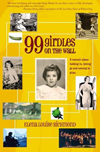
For a while I puzzled over the older sisters’ bad behavior.  That was pure disassociation on my part.  Nothing comes from nothing.  I understand what it feels like to be raised by self-absorbed parents who have no idea that their attitudes and behavior impact their children.  I even wrote a memoir about it (https://www.elenalouiserichmond.com/99-girdles/)sadism

I believe that all human beings have a full capacity of human feeling and behavior.  We all have within us the many permutations of love, sadness, fear and rage.  I personally interpret the daughters in King Lear as aspects of myself.  I had a mother like Lear and I believe I responded to her at different times in the three ways represented by Goneril, Regan and Cordelia.

Goneril got so little love from her father that she now takes everything she can get for herself.  Her life is a 24 hour-a-day maintenance job.  My mother accused me of that kind of selfishness often enough:

“You think the world revolves around you!”

“Who did I learn that from?”

“I’m your mother!”

“Relevancy?”

Regan is a sadist.  She gets sexually excited during the aforementioned eye-gouging.  Me, I had to spit out my grape.  Even though I think we are all capable of sadism, mine doesn’t rise to the level of Regan’s.  Schaedenfreude is probably the worst I can be accused of.  The murderous rage I felt toward my mother was pretty much confined to verbally abusing my analyst.  Becoming the abuser is a classic response to being abused.

Then there’s Cordelia. She has empathy for Lear in spite of how badly he treated her, and comes to his aid in the end.  In the beginning she is almost haughty in her idealistic refusal to play the stupid game he has set up.  This refusal begins the chain of events that end in her death and almost everyone else’s.

When my father was dying I told him the truth.  When my mother was dying I told her what she wanted to hear.  At the end of their lives I found a way to love them in the ways I knew they wanted.

I feel exposed.  But I think that is the effect a play like King Lear can have.  The archetypal themes strike deep and impel us to do what Edgar says in the last lines of the play, “Speak what we feel, not what we ought to say.” In spite of the dismal ending, I read possibilities of transformation and hope, which is a relief after the play’s frenzy and hate. Cordelia and Lear both die knowing that they love and are loved.

Here are the great lines:


*Love is not love when is mingled with regards that stands aloof from the entire point. (I, i)


*Now, gods, stand up for bastards!  (I, ii)


*This the excellent foppery of the world that when we are sick in fortune, often surfeits of our own behavior, we make guilty of our disasters the sun, the moon, and stars; as if we were villains on necessity, fools by heavenly compulsion.  (I, ii)


*I have years on my back forty eight.  (I, iv)


*Lear: Dost thou call me fool, boy?
Fool: All thy other titles thou hast given away.  (I, iv)


*How sharper than a serpent’s tooth it is to have a thankless child.  (I, iv)


*Striving to better we often mar what’s well.  (I, iv)


*Lily-livered (II, ii)


*I am a man more sinned against than sinning.  (III, ii)


*. . .foul Flibbertigibbet. (III, iv)


*Fie, foh, and fum

I smell the blood of a British man (III, iv)


*And worse I may be yet.  The worst is not

So long as we can say ‘This is the worst.’  (IV, i)


*As flies to wanton boys are we to the gods;

They kill us for their sport.  (IV, i)


*Tis the time’s plague when madmen lead the blind.  (IV, i)


*Howl, howl, howl! . . .she’s dead as earth.  (V, iii)


Shakespeare

July 10, 2012

King John

Tags: , , , , ,

Here’s rather a maligned fellow.  The king deserves it but not the play itself. The Friendly Shakespeare says The Life and Death of King John is the most unfamiliar and disliked play in the canon. Now I call that jolly unfair.  It has a fabulous part in it for Claire Bloom and some of the most famous phrases in Shakespeare.

When I started reading it I thought my point of reference would be the Magna Carta because while watching a history of Britain over at The Gwen, I realized that this particular King was The John.  But Shakespeare didn’t mention the Magna Carta at all.  He had other points to make and other reasons to write the play.

Isaac Asimov wrote a several thousand page guide to Shakespeare, which doesn’t attempt to interpret the text, but which gives historical background and elucidation of the odd phrase.  His piece about King John is one long comment about how unhistorical the play is. Shakespeare creates Philip Faulconbridge (called unceremoniously Philip the Bastard) for dramatic purposes.  He makes a widow of a woman who herself wasn’t even alive in order to enhance the poignancy of her son’s death.  Then he drags ten years of history into a heap to form the last two acts of the play.

I love this about Shakespeare.  I know it drives the literalistic among us crazy but I love the way he plays fast and loose with facts in order to create something.  He has what I consider a proper attitude toward “facts,” which are contestable and can be deconstructed.  He goes for emotional truth.  He wanted to tell a story about a quarrel over succession rights and how killing a child-king named Arthur set off a chain of events to be explored in further history plays.  And he didn’t want to offend the court of Elizabeth I.  We all have our constraints.

Amongst watercolorists, there are those who want to deliver a scene that mirrors the one in front of them.  And there are those who use what’s in front of them as a staging ground to deliver something that’s in their own imagination.  Among musicians there are those whose joy comes from the notion that they are replicating Bach right down to the touch of the viol de gamba and those to whom the spirit of Bach is one of improvising. We all have our preferences.

King John is a creepy character who with full cooperation from the equally creepy bishop from Rome, which seems a prerequisite for being a bishop at all, orders the assassination of Arthur, the boy-heir to the throne.  Then he relents and decides to just have the child’s eyes gouged out with a hot iron.  After a disturbing scene where Arthur begs to not be mutilated, Hubert, the fellow given the assignment and who also did not exist according to Asimov, cannot bring himself to carry it out.

Hubert hides the child but word has gone out that the King has murdered the boy and his outraged peeps begin to desert him.  The King cravenly tells Hubert that Hubert had misunderstood his orders.  Hubert pulls out the death warrant and asks which part of it he misunderstood.  King John is not so much ashamed as relieved when Hubert confesses that the boy is alive and has full use of his eyes. Meantime, Arthur, in trying to escape from his prison, has fallen to his death.  France goes to war with England because no one believes the child’s death was an accident and the succession is now an open question.

Just when I was hoping someone would murder King John, he dies. Philip the Bastard who, you might recall, does not actually exist, as the (illegitimate) son of Richard the Lion-Hearted actually has some claim to the throne.  He makes the remarkable gesture of recognizing John’s young son Henry as the new king of England.  Though he never became King of England, Ireland and select parts of France, he is the hero of the play. Not bad for someone who didn’t exist.

King John is where we find the phrases “foul play,” “twice-told tale,” “bell, book, and candle,” and the expression “gilding the lily” although the actual line is “To gild refined gold, to paint the lily.”  (I found these in the text, I didn’t look them up in Bartlett’s.)

The news that King John’s mother has died is delivered with the words, “her ear is stopped with dust.”

Arthur’s mother Constance has a heart-rending speech:


Grief fills the room up of my absent child,

Lies in his bed, walks up and down with me,

Puts on his pretty looks, repeats his words

Remembers me of all his gracious parts,

Stuffs out his vacant garments with his form . .  (III, iv)


And finally there is a line that I feel sums up my Shakespeare experience thus far:

“Zounds! I was never so bethumped with words. . .” (II, i)


BooksShakespeare

July 8, 2012

Troilus and Cressida

Tags: , , , , , ,

In Olivia Manning’s wonderful Balkan Trilogy set in World War II Bucharest, Guy Pringle, most lovable of extroverts, decides to do an amateur production of Shakespeare. He chooses Troilus and Cressida.  It’s so accessible to the ex-pats and legation folks that I think, well, how hard a play could it be?

So here I am at the beginning of Troilus and Cressida:


In Troy there lies the scene.  From isles of Greece

The princes orgulous, too much arugula in that salad last night their high blood chafed

Have to the port of Athens sent their ships,

Fraught with the ministers and instruments piano needs tuning

Of cruel war. Sixty and nine, that wore

Their crownets regal, Does Gwen have any more of that Crown Royal from th’ Athenian Bay

Put forth toward Phrygia; Phrygian mode, which one is that and their vow is made

To ransack Troy, within whose strong immures immures. immures. immures?

The ravished Helen, Menelaus’ queen,

With wanton Paris sleeps; and that’s the quarrel.

To Tenedos they come, isn’t that a ski resort?

And the deep drawing barks do there disgorge

Their warlike fraughtage. I’ve always liked that word fraught Now on Dardan’s plains does that have something to do with the Dardanelles?

The fresh and yet unbruised Greeks do pitch

Their brave pavilions.  Priam’s six gated city

Dardan and Timbria, Helias, Chetas, Troien,

And Antenonidus — with massy staples need to go to Office Depot before that coupon runs out

And corresponsive and fulfilling bolts, bolts, Frankenstein

Stir up the sons of Troy.

Now expectation, tickling skittish spirits

On one and other side, Trojan and Greek,

Sets all on hazard. Those fires in Colorado sounded horrific And hither am I come,

A prologue armed, but not in confidence

Of author’s pen, or actor’s voice, but suited

In like conditions as our argument,

To tell you (fair beholders) that our play Does Derek Jacobi do this part?

Leaps o’er the vaunt and firstlings of those broils,

Beginning in the middle, starting thence away

To what may be digested in a play.

Like, or find fault; do as your pleasures are.

Now good or bad, ’tis but the chance of war. That’s a cool line ok what was all this about?


And so–this is not Shakespeare anymore, this is the rest of my blog post–I begin, not in confidence, to borrow a phrase.  I have learned something on this, my sixth play of this project.  I have learned to approach the verbiage of Shakespeare the way I do the crowds at the Folk Life festival.  I let the words carry me along while I get used to the feel, the smell, the noise, the rhythm, and the texture until something emerges that piques my interest and pricks my understanding. I read three columns of speeches in Troilus and Cressida before I realized, “Oh, ok. They’re planning to roust Achilles from his pouting by promoting Ajax. Got it.”

I am hazy on The Iliad but that hardly matters because Shakespeare has turned the Greek myth inside out.  Achilles, sulking in his tent with a male lover, is a symptom of the disarray and the low morale of the Greek camp.  Ulysses has a celebrated speech when he details the way life is ordered in the Elizabethan cosmos.  When the hierarchy is upset, apparently one ends up with Achilles lying around with his lover and unwilling to fight. (When I came upon this speech in my Pelican Shakespeare I found margin notes from my days as an English major.  Huh.  I don’t remember reading this.)

Then over in the Troyan (he doesn’t call it Trojan) camp the gang is considering why this blasted war has gone on for seven years.  “Helen is the quarrel,” they conclude.   They agree they really ought to give her back because they are in the wrong, but then amidst a lot of posturing about honor and renown, they decide they won’t.

Enter Thersites, a jester-type character who hasn’t had a wash in several years and whose mouth is as filthy as the rest of him.  He pretty much farts in the general direction of both camps and declares that the war is being fought for “a whore and a cuckold.”  After a while I got used to Thersites as being not only the most disgusting piece of work in the play but also as the only one who tells the truth.  And he has some great insults.

Briefly: Cressida is a Greek woman who is pimped over to Troilus on the Troyan side by her Uncle Pandarus and from his name we get the word pander.  She turns out not to be trusted and Troilus goes from being love-sick to being what we would today call in denial.  By the end of the play, Cressida has been returned and Achilles has his henchmen murder an unarmed Hector, the great hero of the Iliad.  The play ends with the Troyans mourning over the mashed-up body of Hector.  Whereupon Pandarus, distraught, tells us he is going to carry-on his pimp trade in the “hold-door” establishments–the brothels-and his is the disturbing last line of this play about war:

. . . I’ll sweat and seek about for eases,

And at that time bequeath you my diseases.


So yeah.  Creepy.  But here are some lines I liked:


*Then everything includes itself in power,

Power into will, will into appetite,

And appetite, an universal wolf,

So doubly seconded with will and power,

Must make perforce an universal prey

And last eat up himself. (I, iii)


*The amity that wisdom knits not, folly may easily untie. (II, iii)


*a sleeping giant (II, iii)


*Ajax: An all man were of my mind

Ulysses (aside): Wit would be out of fashion (II, iii)


*Generation of vipers (III, i)


*This is the monstruosity in love, lady, that the will is infinite and the execution confined; that the desire is boundless and the act a slave to limit.  (III, ii)


*Pride hath no other glass to show itself but pride.  (III, iii)


*Those wounds heal ill that men do give themselves.  (III, iii)


*Lechery, lechery; still wars and lechery. . . (V, iii)


Here are few of Thersites’(tamer) insults:

“Idol of idiot-worshippers.”

“not so much brain as ear-wax.”

“that stale old mouse-eaten dry cheese, Nestor”


This is such a bitter, cynical play that I think what the hey, I’ll do King Lear next!


BooksFriendsShakespeareSingingSongs

July 6, 2012

Twelfth Night

Tags: , , , ,

I was three pages into Harold Bloom’s celebrated masterpiece, Shakespeare, the Invention of the Human, and Twelfth Night sounded like the dullest play ever written. So I did myself a favor: I put Harold Bloom on the shelf for my annual yard sale.  Then I plowed through the text of Twelfth Night once so I could know I had actually read it since this is my project: to read the works of Shakespeare.

I realized right away that Twelfth Night needs to be seen. Reading it for the first time, it was too hard to keep track of a woman disguised as a man but still resembling her twin brother enough that another woman who falls in love with the woman will easily transfer her affections to the man who looks like his sister once the other woman realizes that the woman is a woman.  Marriage equality was not to come about for another 500 years and the now reasonable notion that if a woman was attracted to another woman, maybe she was a lesbian, is not explored here.

Twelfth Night needs to be heard, too, because of all the songs that the fool sings.  His first song, “O Mistress Mine, where are you roaming” I long ago learned from recordings of Janet Baker, my all-time favorite mezzo-soprano. Even when I was in my twenties, I got a lump in my throat hearing her voice declaiming,


Then come kiss me sweet and twenty,

Youth’s a stuff will not endure


In any case, I am so glad I did not let Harold Bloom put me off. I went on an orgy of watching four different productions on DVD. Then I re-watched my two favorites and re-read the play a second time.  That’s eight times through the play and now I know bits of it by heart, I can’t wait to see it at Shakespeare in the Park in Seattle this summer.

A couple of performances on those DVDs made the play alive for me.  Joan Plowright as Viola (1969) was a revelation not just of the character but of the craft of acting.  She pulled into herself and her soul shone through her eyes when she said:


Make me a willow cabin at your gate
And call upon my soul within the house,
Write loyal cantons of contemnèd love,
And sing them loud even in the dead of night;
Hallow your name to the reverberate hills. . .


Ronnie Stevens as Sir Andrew Aguecheek (1980) made me totter between wet-my- pants laughing and suddenly wanting to sob when he says, “I was adored once, too.”

Twelfth Night is one of those plays full of famous and quotable lines.  Here are some of the ones I wrote down in my notebook:


*What great ones do, the less will prattle of (I, ii)


*Methinks sometimes I have no more wit than a Christian or an ordinary man has.  But I am a great eater of beef and I believe that does harm to my wit. (I, iii)


*Is it a world to hide virtues in? (I, iii)


*Many a good hanging prevents a bad marriage. (I, v)


*Journey’s end in lover’s meeting. . .

What is love? Tis not hereafter;

Present mirth hath present laughter;

What’s to come is still unsure;

In delay there lies no plenty;

Then come kiss me sweet and twenty,

Youth’s a stuff will not endure.   (II, iii)


*Dost thou think, because thou art virtuous, there shall be no more cakes and ale? (II, iii)


*He does it with better grace, but I do it more natural. (II, iii)


*She never told her love

But let concealment like a worm in the bud,

Feed on her damask cheek.  She pined in thought,

And with a green and yellow melancholy,

She sat like Patience on a monument,

Smiling at grief.  (II, iv)


*He hath been yonder in the sun practicing behavior to his own shadow. (II, v)


*Be not afraid of greatness: Some are born great, some achieve greatness, and some have greatness thrust upon them. (II, v)


*A sentence is but a chev’ril glove to a good wit.  How quickly the wrong side may be turned outward.  (III, i)


*Foolery, sir, does walk about the orb like the sun; it shines everywhere. (III, i)


*Out of my lean and low ability, I’ll lend you something. (III, iv)


*If music be the food of love, play on. (First line)

The very first line of Twelfth Night is associated in my mind with my college roommate, formerly The Very Miss Mary-Ellis Lacy, who has not lost her youthful sensibilities.(https://www.elenalouiserichmond.com/2012/06/the-very-miss-kiss-my-ass-girl/) Mary-Ellis grew up to be a Singer. In one of her celebrated performances she begins a song by Henry Purcell called “If music be the food of love, sing on” while lovingly caressing a box of See’s Candy.

Maybe youth has stuff that can endure.


Politics

July 4, 2012

We’re Choppin’ Broccoli

Tags: , , , ,

A few weeks ago I decided I would allow myself only one news story to get upset about.  There isn’t enough time in my day to work myself into as many frenzies as I am capable of.  So I chose to Stand with the Sisters, the nuns who are bearing up with such grace under the bishops’ unseemly prosecution of them.  The bishops are all men who have probably not even spoken to a woman in 50 years.

When I decided to begin reading the entire works of Shakespeare, my preoccupation with the nun story shrunk to pre-Internet, if not bucolic standards.  Then we got the announcement that there would be an announcement about the Supreme Court decision on the Affordable Care Act hereafter known as the Obama Cares Act.  I had been dreading the day that the ruling was to come down.  Last Thursday morning I didn’t want to open the computer at all-didn’t even want to get out of bed- but I have a responsibility to my Scrabble partners.

When I got on Facebook to play Scrabble, I saw the post of a friend who shall go unnamed because she guards her FB privacy in ways that I don’t pretend to understand so I’d best take no chances.  The post said, “We can have our broccoli and eat it, too.”

“Oh my god!” I thought. “I don’t believe it!” I raced to the New York Times to read the full story.  I was stunned.  The Supreme Court upheld the A.C.A. pretty much as it was written.

In case you don’t know, the broccoli comment was an allusion to Antonin Scalia’s famously fatuous argument against the individual mandate in the A.C.A, the bit where all Americans are required to have health insurance just like all drivers must have car insurance:

“Can the federal government make you buy broccoli?” he asked.

What is it with these guys and broccoli anyway? George Bush maligned it, and Scalia is afraid he might be forced to have it in his grocery bag, hobnobbing with the lemons he must regularly eat.

In any case, this country has finally taken a step toward doing something about our abysmal health care situation and a lot of us feel relieved.  That relief would have kept me afloat all day on Thursday but there was a comic short to accompany the major feature.  Shortly after the ruling came down, Facebook and Twitter exploded with the outrage of people who were not happy with the ruling.  They were, en masse it seemed, all non-ironically moving to Canada to get away from this stupid, socialist country.  Canada. Which has had publicly funded medical care since 1966.

Now that I’ve gotten all that out of my system, I’ll get to my larger point, something I’ve been thinking about as I’ve listened to people expressing their opinions about the law.  To some folks, it’s signaling the end of the world: Obama is finished. The Dems will never get back the house after this. This law now guarantees a nanny state.  It will bankrupt us.  I don’t want to have to pay for your contraception.  From other perspectives: Finally I can get some decent insurance. The Constitution, the States, and the People won!  Yay for America!

What struck me was how certain we all are of what we think this ruling will mean for us as individuals, for our state, for the country, for our standing in the world.  We are all. so. sure.   Guarantees are what we go looking for when the anxiety is overwhelming.  We’ve never done anything quite like this in our country so it’s uncharted territory. Adam Philips who I like to read when I think the world is coming to an end, says we are all experts when it comes to experiences we haven’t had.

Up until now, with such expensive but lousy insurance as I’ve had, I have known I was screwed. This health care ruling signals an experience I haven’t had.  There’s a long way to go before all the wrinkles are ironed out and the country actually experience any changes, good or bad.  Meantime I am optimistic.  Now excuse me, I’ve got broccoli on the stove.

BooksEnglandMoviesShakespeareSongs

June 28, 2012

Henry V

Tags: , , , , ,

I’m not sure I even realized that Shakespeare wrote a play called Henry V let alone that I would like it.  Harold Bloom (my stuffy discussant) had very little to say about it other than Falstaff isn’t in it.  He seems to judge every character by Falstaff or Hamlet.  I get it: they’re transcendent characters.  Move on.

Here are a few of this plays’ famous lines:


“Once more into the breach!”

“The game’s a-foot.”

“We few, we happy few, we band of brothers.”

“Every subject’s duty is the king’s but every subject’s soul is his own.”   (I don’t know if that’s famous, but I liked it)


At the beginning of Act III, the chorus tells us to “eke out our performance with your mind.”  I read that as a post-modern woman.  I take it as an invitation to free-associate.  And here I go:

For starters, the first lines of Henry V took my breath away:


O for a muse of fire, that would ascend

The brightest heaven of invention;

A kingdom for a stage. . .


When a play references the fact that the story is played out on a stage, I used to think, “Well, duh, that’s why I had a ticket.”  But there’s something comforting about thinking of life as an under-rehearsed production.  Community theater with real people flubbing their lines and improvising.

Then I got excited when I realized this play is about the battle of Agincourt which I am happy to announce that I have learned to pronounce correctly after mispronouncing it for years.  It’s “ajin-cor,” not “agin-court.”  As a collector of songs I have known about “The Agincourt Carol,” written in the 15th century to recount the 1415 battle of Agincourt.  It’s one of the oldest recorded songs in western music.  And by recorded I mean written down on paper, not put on a CD in someone’s basement studio.

It’s been tarted up with rhythm, meter and hymn texts like “A Hymn of Glory Let Us Sing” by the Venerable Bede. (The Venerable Bede.  I can’t believe we give people titles like this. It’s like conferring a Master of Divinity, as if theologians aren’t arrogant enough.) I always get a little frisson when I hear a hymn sung to this ancient (albeit tarted-up) melody.  It’s a thread back to the past, connecting me with generations of other under-rehearsed productions.

They don’t sing “The Agincourt Carol” in Kenneth Branagh’s exuberant film of Henry V.  Instead, as they are picking up their dead at the end of the battle they sing a contemporary choral piece by Patrick Doyle called “Non Nobis Domine” which was so moving, I played it over and over and just wept.  The OK Chorale is so doing this piece fall quarter.  I’ve already ordered the music.

Picking up their dead.  War is just so damn stupid.  I surprise myself when a movie like Greatheart gets me excited.  I mean throbbing excited.  This play, Henry V, about the muddy, bloody battle of Agincourt which the English won against the superior French forces moved me; and I found that disturbing. Henry’s speech, the St Crispian Day speech, just before the battle is so full of longing, pride, anticipation, and hope that I wanted to punch the air and yell.  I wondered how I could get so excited about a war pep-talk when war is so stupid.  I concluded that war is a displacement of something else, something that’s not stupid at all, something so precious we would kill for it.

In his book War is a Force that Gives Us Meaning, Chris Hedges says, “In the beginning war looks and feels like love.  But unlike love, it gives nothing in return but an ever deepening dependence.”  He also says that we will never find our purpose through war:  “We will never discover who we are.  We will fail to confront the capacity we all have for violence.”

That war gives some purpose to life is certainly a sobering indictment.  Confronting our capacity for violence and understanding the emptiness we try to fill with war is a script that needs lots more rehearsal time.


Ah, Humanity

June 26, 2012

Bras, Hooks and UnaBoobs

Tags: , , , , ,

Now that everyone is talking pretty freely about vaginas these days, I trust no one will mind if today’s subject is bras.  I hate them.  I have been measured and prodded and fitted for them at least ten times.  In 45 years of wearing bras, there was one that was comfortable once for five minutes in a Nordstrom fitting room as long as I didn’t move.  And one that I bought from a special bra-making factory that was okay until I washed it.

My friend Nina (rhymes with Dinah) has a riff about how if you don’t mind how it looks you can get a halfway comfortable sports bra but then you get this sausage effect across the front of your chest, or the “Una-boob.”  There isn’t an innovative solution for bra discomfort.  It’s not like the girdle which was replaced by garter belts, then pantyhose and finally no hose at all except the little footies we try to hide in certain kinds of shoes or the knee highs we think no one can see when we cross our legs under our long skirts.

Girdles were just stupid.  When I am out and about signing my book which if you’ve been out of the country is called 99 Girdles on the Wall (buy it here: https://www.elenalouiserichmond.com/99-girdles/ ), I get into lots of conversations with women who remember girdles.  When I try to explain girdles to younger women, I emphasize that if you could actually wear a girdle with any degree of comfort, you didn’t need one as you had no fat on your body.  If you needed one –like anyone really needed one—which meant you didn’t have the requisite 36-24-36 figure–then you couldn’t wear one. (In those days we didn’t have bodies, we had figures, except that some of us just had bodies.) All a girdle did was squish the fat into the armpits or necks and only one person was fooled.

Some women can go without bras just fine.  But for a lot of us going without amounts to floppiness or pain or both.  So I spend my days adjusting my bra and taking it off the minute I have an hour of alone time.  I hate to think how someone might imitate me in a game of Charades: as someone talking to herself and pulling at her bra.  Nice.

Bra fitters have, I think, a different frame of reference than I do.  For one thing they keep talking about breast tissue. They reach in there, yammering about fitting the breast tissue to the bra cup.  I expect them to run out of the room and push a button as soon as the breast tissue gets settled in the cup. It seems to me that a bra ought to be built to fit the breast and then we could just not talk about it at all.

A bra fitter will not let you out of the store in a bra that you could slide a dime under.  They measure you, and then come back with bras four inches tighter than you would ever consider wearing.  It becomes a war of wills.

“I want something looser,” I said the last time I put myself through this.

“No.  It needs to be snug since you won’t wear the underwires.”

“OK, well I think I won’t buy one today.”

The fitter narrowed her eyes at me. “Wait just a minute.”

She came back before I had time to get dressed, grab my purse and run out of the lingerie section.

“Try this one.”

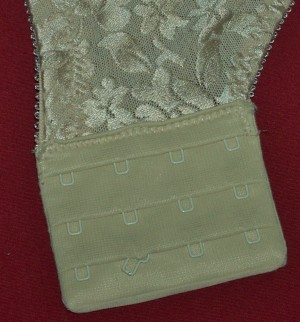
She showed me a bra with three rows of eyes to hook onto.

“This is the row you’ll hook up most days.  By the end of the day you might hook up this middle row.  On days you’re feeling bloated you use the last row.”

I bought the bra.  I hook one hook onto one eye on the last row of hooks.  You can see it pulling out of line, a hook after my own heart.  I figure that when it comes out completely I have three more to go through before I have to buy another bra.

Hook out of line.